Falls |
Sometimes, store customers are injured in fall downs caused by wet and slippery floors or failure by stores to clean up broken or fallen items. No one plans on being injured in an accident, whether it is a car accident, fall down or other situation. Speak with a personal injury attorney immediately to retain all your rights. The stores are responsible for the maintenance of their premises which are used by the public. It is the duty of the store to inspect and keep said premises in a safe condition and free from any and all pitfalls, obstacles or traps that would likely cause injury to persons lawfully thereon. It is further the duty of the store to properly and adequately inspect, maintain and keep the library premises free from danger to life, limb and property of persons lawfully and rightfully using same and to warn of any such dangers or hazards thereon. You may be lawfully upon the premises as a business invitee in the exercise of due care on your part, and solely by reason of the omission, failure and default of the store, be caused to fall down If the store did not perform their duty to plaintiff to maintain the premises in a safe, suitable and proper condition, you may be entitled to make a claim. If severely injured, you can file a claim for damages, together with interest and costs of suit. Injured people can demand trial by jury. The following information is taken from the old model jury charges dealing with fall downs by store customers: INVITEE - DEFINED AND GENERAL DUTY OWED An invitee is one who is permitted to enter or remain on land (or premises) for a purpose of the owner (or occupier). He/She enters by invitation, expressed or implied. The owner (or occupier) of the land (or premises) who by invitation, expressed or implied, induced persons to come upon his/her premises, is under a duty to exercise ordinary care to render the premises reasonably safe for the purposes embraced in the invitation. Thus, he/she must exercise reasonable care for the invitees safety. He/She must take such steps as are reasonable and prudent to correct or give warning of hazardous conditions or defects actually known to him/her (or his/her employees), and of hazardous conditions or defects which he/she (or his/her employees) by the exercise of reasonable care, could discover. BUSINESS INVITEE FALL DOWNS: The basic duty of a proprietor of premises to which the public is invited for business purposes of the proprietor is to exercise reasonable care to see that one who enters his/her premises upon that invitation has a reasonably safe place to do that which is within the scope of the invitation. Notes: (1) Business Invitee: The duty owed to a business invitee is no different than the duty owed to other invitees. (2) Construction Defects, Intrinsic and Foreign Substances: The rules dealt with in this section and subsequent sections apply mainly to those cases where injury is caused by transitory conditions, such as falls due to foreign substances or defects resulting from wear and tear or other deterioration of premises which were originally constructed properly. Where a hazardous condition is due to defective construction or construction not in accord with applicable standards it is not necessary to prove that the owner or occupier had actual knowledge of the defect or would have become aware of the defect had he/she personally made an inspection. In such cases the owner is liable for failing to provide a safe place for the use of the invitee. Thus, in Brody v. Albert Lipson & Sons, 17 N.J. 383 (1955), the court distinguished between a risk due to the intrinsic quality of the material used (calling it an intrinsic substance case) and a risk due to a foreign substance or extra-normal condition of the premises. There the case was submitted to the jury on the theory that the terrazzo floor was peculiarly liable to become slipper when wet by water and that defendant should have taken precautions against said risk. The court appears to reject defendants contention that there be notice, direct or mputed by proof of adequate opportunity to discover the defective condition. 17 N.J. at 389. It may be possible to reconcile this position with the requirement of constructive notice of an unsafe condition by saying that an owner of premises is chargeable with knowledge of such hazards in construction as a reasonable inspection by an appropriate expert would reveal. See: Restatement to Torts 2d, §343, Comment f, pp. 217-218 (1965), saying that a proprietor is required to have superior knowledge of the dangers incident to facilities furnished to invitees. Alternatively, one can view these cases as within the category of defective or hazardous conditions created by defendant or by an independent contractor for which defendant would be liable (see introductory note above). Cases: Bozza v. Vornado, Inc., 42 N.J. 355, 359 (1954) (slip and fall on sticky, slimy substance in self-service cafeteria which inferably fell to the floor as an incident of defendants mode of operation). Buchner v. Erie Railroad Co., 17 N.J. 283, 285-286 (1955) (trip over curbstone improperly illuminated). Brody v. Albert Lifson & Sons, 17 N.J. 383, 389 (1955) (slip and fall on wet composition floor in store). Bohn v. Hudson & Manhattan R. Co., 16 N.J. 180, 185 (1954) (slip on smooth stairway in railroad station). Williams v. Morristown Memorial Hospital, 59 N.J. Super. 384, 389 (App. Div. 1960) (fall over low wire fence separating grass plot from sidewalk). Nary v. Dover Parking Authority, 58 N.J. super. 222, 226-227 (App. Div. 1959) (fall over bumper block in parking lot). Parmenter v. Jarvis Drug Store, Inc., 48 N.J. Super. 507, 510 (App. Div. 1957) (slip and fall on wet linoleum near entrance of store on rainy day). Nelson v. Great Atlantic & Pacific Tea Co., 48 N.J. Super. 300 (App. Div. 1958) (inadequate lighting of parking lot of supermarket, fall over unknown object). Barnard v. Trenton-New Brunswick Theatre Co., 32 N.J. Super. 551, 557 (App. Div. 1954) (fall over ladder placed in theatre lobby by workmen of independent contractor). Ratering v. Mele, 11 N.J. Super. 211, 213 (App. Div. 1951) (slip and fall on littered stairway at entrance to restaurant). DUTY TO INSPECT OWED TO INVITEE The duty of an owner (or occupier) of land (or premises) to make the place reasonably safe for the proper use of an invitee requires the owner or occupier to make reasonable inspection of the land (or premises) to discover hazardous conditions. Cases: Handelman v. Cox, 39 N.J. 95, 111 (1963) (salesman showing merchandise to employees of defendant fell down cellar stairway partially obscured by carton) NOTICE OF PARTICULAR DANGER AS CONDITION OF LIABILITY If the jury members find that the land (or premises) was not in a reasonably safe condition, then, in order to recover, plaintiff must show either that the owner (or occupier) knew of the unsafe condition for a period of time prior to plaintiffs injury sufficient to permit him/her in the exercise of reasonable care to have corrected it, or that the condition had existed for a sufficient length of time prior to plaintiffs injury that in the exercise of reasonable care the owner (or occupier) should have discovered its existence and corrected it. Cases: Tua v. Modern Homes, Inc., 64 N.J. Super. 211 (App. Div. 1960), affirmed, 33 N.J. 476 (1960) (slip and fall on small area of slipper waxlike substance in store); Parmenter v. Jarvis Drug Store, Inc., 48 N.J. Super. 507, 510 (App. Div. 1957) (slip and fall on wet linoleum near entrance of store on rainy day); Ratering v. Mele, 11 N.J. Super. 211, 213 (App. Div. 1951) (slip and fall on littered stairway at entrance to restaurant). Notes: (1) The above charge is applicable to those cases where the defendant is not at fault for the creation of the hazard of where the hazard is not to be reasonably anticipated as an incident of defendants mode of operation. See: Maugeri v. Great Atlantic & Pacific Tea Company, 357 F.2d 202 (3rd Cir. 1966) (dictum). (2) An employees knowledge of the danger is imputed to his/her employer, the owner of premises. Handelman v. Cox, 39 N.J. 95, 104 (1963). NOTICE NOT REQUIRED WHEN CONDITION IS CAUSED BY DEFENDANT If the jury members find that the land (or premises) was not in a reasonably safe condition and that the owner (or occupier) or his/her agent, servant or employee created that condition through his/her own act or omission, then, in order for plaintiff to recover, it is not necessary for the jury members also to find that the owner (or occupier) had actual or constructive notice of the particular unsafe condition. Cases: Smith v. First National Stores, 94 N.J. Super. 462 (App. Div. 1967)(slip and fall on greasy stairway caused by sawdust tracked onto the steps by defendants employees); Plaga v. Foltis, 88 N.J. Super. 209 (App. Div. 1965) (slip and fall on fat in restaurant area traversed by bus boy); Torda v. Grand Union Co., 59 N.J. Super. 41 (App. Div. 1959) (slip and fall in self-service market on wet floor near vegetable bin). Also see: Thompson v. Giant Tiger Corp., 118 N.J.L. 10 (E. & A. 1937); Wollerman v. Grand Union Stores, Inc., 47 N.J. 426 (1956); Lewin v. Orbachs, Inc., 14 N.J. Super. 193 (App. Div. 1951); Maugeri v. Great Atlantic & Pacific Tea Company, 357 F.2d 202 (3rd Cir. 1966). BURDEN OF GOING FORWARD In Wollerman v. Grand Union Stores, Inc., 47 N.J. 426, 429-430 (1966), the court held that where string beans are sold from bins on a self-service basis there is a probability that some will fall or be dropped on the floor either by defendants employees or by customers. Since plaintiff would not be in a position to prove whether a particular string bean was dropped by an employee or another customer (or how long it was on the floor) a showing of this type of operation is sufficient to put the burden on the defendant to come forward with proof that defendant did what was reasonably necessary (made periodic inspections and clean-up) in order to protect a customer against the risk of injury likely to be generated by defendants mode of operation. Presumably, however, the burden of proof remains on plaintiff to prove lack of reasonable care on defendants part. If defendant fails to produce evidence of reasonable care, the jury may infer that the fault was probably his. See also: Bozza, supra, 42 N.J. at 359. Whether or not defendant has furnished an invitee with a reasonably safe place for his/her use may depend upon the obviousness of the condition claimed to be hazardous and the likelihood that the invitee would realize the hazard and protect himself/herself against it. Even though an unsafe condition may be observable by an invitee the jury members may find that an owner (or occupier) of premises is negligent, nevertheless, in maintaining said condition when the condition presents an unreasonable hazard to invitees in the circumstances of a particular case. If the jury members find that defendant was negligent in maintaining an unsafe condition, even though the condition would be obvious to an invitee, the fact that the condition was obvious should be considered by the jury members in determining whether the invitee was contributorily negligent (a) in proceeding in the face of a known hazard or (b) in the manner in which the invitee proceeded in the face of a known hazard. DISTRACTION OR FORGETFULNESS OF INVITEE Even if the jury members find that plaintiff knew of the existence of the unsafe or defective condition, or that the unsafe or defective condition was so obvious that defendant had a reasonable basis to expect that an invitee would realize its existence, plaintiff may still recover if the circumstances or conditions are such that plaintiffs attention would be distracted so that he/she would not realize or would forget the location or existence of the hazard or would fail to protect himself/herself against it. Thus, even where a hazardous condition is obvious the jury members must first determine whether in the circumstances the defendant was negligent in permitting the condition to exist. Even if defendant was negligent, however, if plaintiff knew that a hazardous condition existed, plaintiff could not recover if he/she was contributorily negligent, that is to say, plaintiff could not recover if he/she did not act as a reasonably prudent person either by proceeding in the face of a known danger or by not using reasonable care in the manner in which he/she proceeded in the face of the danger. In considering whether plaintiff was contributorily negligent the jury members may consider that even persons of reasonable prudence in certain circumstances may have their attention distracted so that they would not realize or remember the existence of a hazardous condition and would fail to protect themselves against it. Mere lapse of memory or inattention or mental abstraction at the critical moment is not an adequate excuse. One who is inattentive or forgetful of a known and obvious danger is contributorily negligent unless there is some condition or circumstance which would distract or divert the mind or attention of a reasonably prudent person. Note: In McGrath v. American Cyanamid Co., 41 N.J. 272 (1963), the employee of a subcontractor was killed when a plank comprising a catwalk over a deep trench up-ended causing him to fall. The court held that even if the decedent had appreciated the danger that fact by itself would not have barred recovery. The court said if the danger was one which due care would not have avoided, due care might, nevertheless, require notice of warning unless the danger was known or obvious. If the danger was created by a breach of defendants duty of care, that negligence would not be dissipated merely because the decedent knew of the danger.Negligence would remain, but decedents knowledge would affect the issue of contributory negligence. The issue would remain whether decedent acted as a reasonably prudent person in view of the known risk, either by incurring the known risk (by staying on the job), or by the manner in which he proceeded in the face of that risk. In Zentz v. Toop, 92 N.J. Super. 105, 114-115 (App. Div. 1966), affirmed o.b., 50 N.J. 250 (1967), the employee of a roofing contractor, while carrying hot tar, tripped over a guide wire supporting an air conditioning tower on a roof. The court held that even if plaintiff had observed the wires or if they were so obvious that he/she should have observed them, the question remained whether, considering the hazard and the work of the employee, he/she was entitled to more than mere knowledge of the existence of the wires or whether he/she was entitled to a warning by having the wires flagged or painted in a contrasting color. This was a fact for the jury to determine. The jury must also determine whether defendant had reason to expect that the employees attention would have been distracted as he/she worked or that he/she would forget the location of a known hazard or fail to protect himself against it. The court also held the plaintiffs knowledge of the danger would not alone bar his/her recovery, but this knowledge goes to the issue of contributory negligence. In Ferrie v. DArc, 31 N.J. 92, 95 (1959), the court held that there was no reasonable excuse for plaintiffs forgetfulness or inattention to the fact that a railing was temporarily absent from her porch, as she undertook to throw bones to her dog, and fell to the ground because of the absence of a railing she customarily leaned upon. The court held: When an injury results from forgetfulness or inattention to a known danger, the obvious contributory negligence is not excusable in the absence of some condition or circumstance which would divert the mind or attention of an ordinarily prudent man. Mere lapse of memory, or inattention or mental abstraction at the critical moment cannot be considered an adequate diversion. One who is inattentive to or forgetful of a known and obvious condition which contains a risk of injury is obvious condition which contains a risk of injury to guilty of contributory negligence as a matter of law, unless some diversion of the type referred to above is shown to have existed at the time. The following discussion in 2 Harper & James, Torts, §27.13, pp. 1489 et seq., (1956), cited with approval in Zentz v. Toop, supra, 92 N.J. Super. at 112, may be helpful in understanding the principles involved in the above charges: Once an occupier has learned of dangerous conditions on his/her premises, a serious question arises as to whether he/she may--as a matter of law under all circumstances--discharge all further duty to his/her invitees by simply giving them a warning adequate to enable them to avoid the harm. A good many authorities, including the Restatement, take the position that he/she may. But this proposition is a highly doubtful one both on principle and authority. The alternative would be a requirement of due care to make the conditions reasonably safe--a requirement which might well be satisfied by warning or obviousness in any given case, but which would not be so satisfied invariably. * * * 1. Defendants duty. People can hurt themselves on almost any condition of the premises. That is certainly true of an ordinary flight of stairs. But it takes more than this to make a condition unreasonably dangerous. If people who are likely to encounter a condition may be expected to take perfectly good care themselves without further precautions, then the condition is not unreasonably dangerous because the likelihood of harm is slight. This is true of the flight of ordinary stairs in a usual place in the daylight. It is also true of ordinary curbing along a sidewalk, doors or windows in a house, counters in a store, stones and slopes in a New England field, and countless other things which are common in our everyday experience. It may also be true of less common and obvious conditions which lurk in a place where visitors would expect to find such dangers. The ordinary person can use or encounter all of these things safely if he/she is fully aware of their presence at the time. And if they have no unusual features and are in a place where he/she would naturally look for them, he/she may be expected to take care of himself if they are plainly visible. In such cases it is enough if the condition is obvious, or is made obvious (e.g., by illumination). * * * On the other hand, the fact that a condition is obvious--i.e., it would be clearly visible to one whose attention was directed to it--does not always remove all unreasonable danger. It may fail to do so in two lines of cases. In one line of cases, people would not in fact expect to find the condition where it is, or they are likely to have their attention distracted as they approach it, or, for some other reason, they are in fact not likely to see it, though it could be readily and safely avoided if they did. There may be negligence in creating or maintaining such a condition even though it is physically obvious; slight obstructions to travel on a sidewalk an unexpected step in a store aisle or between a passenger elevator and the landing furnish examples. Under the circumstances of any particular case, an additional warning may, as a matter of fact, suffice to remove the danger, as where a customer, not hurried by crowds or some emergency, and in possession of his/her facilities, is told to watch his/her step or step up at the appropriate time. When this is the case, the warning satisfies the requirement of due care and is incompatible with defendants negligence. Here again, plaintiffs recovery would be prevented by thatfact no matter how careful he/she was. But under ordinary negligence principles the question is properly one of fact for the jury except in the clearest situations. In the second line of cases the condition of danger is suchthat it cannot be encountered with reasonable safety even if the danger is known and appreciated. An icy flight of stairs or sidewalk, a slippery floor, a defective crosswalk, or a walkway near an exposed high tension wire may furnish examples. So may the less dangerous kind of condition if surrounding circumstances are likely to force plaintiff upon it, or if, for any other reason, his/her knowledge is not likely to be a protection against danger. It is in these situations that the bit of the Restatements adequate warning rule is felt. Here, if people are in fact likely to encounter the danger, the duty of reasonable care to make conditions reasonably safe is not satisfied by a simple warning; the probability of harm in spite of such precaution is still unreasonably great. And the books are full of cases in which defendants, owing such a duty, are held liable for creating or maintaining a perfectly obvious danger of which plaintiffs are fully aware. The Restatement, however, would deny liability here because the occupier need not invite visitors, and if he/she does, he/she may condition the invitation on any terms he/she chooses, so long as there is full disclosure of them. If the invitee wishes to come on those terms, he/she assumes the risk. The Restatement view is wrong in policy. The law has never freed landownership or possession from all restrictions or obligations imposed in the social interest. The possessors duty to use care towards those outside the land is of long standing. And many obligations are imposed for the benefit of people who voluntarily come upon the land. For the invitee, the occupier must make reasonable inspection and give warning of hidden perils. . . But this should not be conclusive. Reasonable expectations may raise duties, but they should not always limit them. The gist of the matter is unreasonable probability of harm in fact. And when that is great enough in spite of full disclosure, it is carrying the quasi-sovereignty of the landowner pretty far to let him ignore it to the risk of life and limb. So far as authority goes, the orthodox theory is getting to be a pretty feeble reed for defendants to lean on. It is still frequently stated, though often by way of dictum. On the other hand, some cases have simply--though unostentatiously--broken with tradition and held defendant liable to an invitee in spite of his/her knowledge of the danger, when the danger was great enough and could have been feasibly remedied. Other cases stress either the reasonable assumption of safety which the invitee may make or the likelihood that his/her attention will be distracted, in order to cut down the notion of what is obvious or the adequacy of warning. And the latter is often a jury question even under the Restatement rule. It is not surprising, then, that relatively few decisions have depended on the Restatement rule alone for denying liability. 2. Contributory Negligence. . . But there are several situations in which a plaintiff will not be barred by contributory negligence although he/she encountered a known danger. . . For another, it is not necessarily negligent for a plaintiff knowingly and deliberately to encounter a danger which it is negligent for defendant to maintain. Thus a traveler may knowingly use a defective sidewalk, or a tenant a defective common stairway, without being negligent if the use was reasonable under all the circumstances. CONCLUSION These situations show that the invitee will not always be barred by his/her self-exposure to known dangers on the premises.
|
Thursday, August 18, 2011
Falls-New articles, ABA newsletters and Community events

Fall Down Law in New Jersey Based on Jury Request to Charge-New articles, ABA newsletters and Community events
Fall Down Law in New Jersey Based on Jury Request to Charge |
Sometimes, store customers are injured in fall downs caused by wet and slippery floors or failure by stores to clean up broken or fallen items. No one plans on being injured in an accident, whether it is a car accident, fall down or other situation. Speak with a personal injury attorney immediately to retain all your rights. The stores are responsible for the maintenance of their premises which are used by the public. It is the duty of the store to inspect and keep said premises in a safe condition and free from any and all pitfalls, obstacles or traps that would likely cause injury to persons lawfully thereon. It is further the duty of the store to properly and adequately inspect, maintain and keep the library premises free from danger to life, limb and property of persons lawfully and rightfully using same and to warn of any such dangers or hazards thereon. You may be lawfully upon the premises as a business invitee in the exercise of due care on your part, and solely by reason of the omission, failure and default of the store, be caused to fall down If the store did not perform their duty to plaintiff to maintain the premises in a safe, suitable and proper condition, you may be entitled to make a claim. If severely injured, you can file a claim for damages, together with interest and costs of suit. Injured people can demand trial by jury. The following information is taken from the old model jury charges dealing with fall downs by store customers: INVITEE - DEFINED AND GENERAL DUTY OWED An invitee is one who is permitted to enter or remain on land (or premises) for a purpose of the owner (or occupier). He/She enters by invitation, expressed or implied. The owner (or occupier) of the land (or premises) who by invitation, expressed or implied, induced persons to come upon his/her premises, is under a duty to exercise ordinary care to render the premises reasonably safe for the purposes embraced in the invitation. Thus, he/she must exercise reasonable care for the invitees safety. He/She must take such steps as are reasonable and prudent to correct or give warning of hazardous conditions or defects actually known to him/her (or his/her employees), and of hazardous conditions or defects which he/she (or his/her employees) by the exercise of reasonable care, could discover. BUSINESS INVITEE FALL DOWNS: The basic duty of a proprietor of premises to which the public is invited for business purposes of the proprietor is to exercise reasonable care to see that one who enters his/her premises upon that invitation has a reasonably safe place to do that which is within the scope of the invitation. Notes: (1) Business Invitee: The duty owed to a business invitee is no different than the duty owed to other invitees. (2) Construction Defects, Intrinsic and Foreign Substances: The rules dealt with in this section and subsequent sections apply mainly to those cases where injury is caused by transitory conditions, such as falls due to foreign substances or defects resulting from wear and tear or other deterioration of premises which were originally constructed properly. Where a hazardous condition is due to defective construction or construction not in accord with applicable standards it is not necessary to prove that the owner or occupier had actual knowledge of the defect or would have become aware of the defect had he/she personally made an inspection. In such cases the owner is liable for failing to provide a safe place for the use of the invitee. Thus, in Brody v. Albert Lipson & Sons, 17 N.J. 383 (1955), the court distinguished between a risk due to the intrinsic quality of the material used (calling it an intrinsic substance case) and a risk due to a foreign substance or extra-normal condition of the premises. There the case was submitted to the jury on the theory that the terrazzo floor was peculiarly liable to become slipper when wet by water and that defendant should have taken precautions against said risk. The court appears to reject defendants contention that there be notice, direct or mputed by proof of adequate opportunity to discover the defective condition. 17 N.J. at 389. It may be possible to reconcile this position with the requirement of constructive notice of an unsafe condition by saying that an owner of premises is chargeable with knowledge of such hazards in construction as a reasonable inspection by an appropriate expert would reveal. See: Restatement to Torts 2d, §343, Comment f, pp. 217-218 (1965), saying that a proprietor is required to have superior knowledge of the dangers incident to facilities furnished to invitees. Alternatively, one can view these cases as within the category of defective or hazardous conditions created by defendant or by an independent contractor for which defendant would be liable (see introductory note above). Cases: Bozza v. Vornado, Inc., 42 N.J. 355, 359 (1954) (slip and fall on sticky, slimy substance in self-service cafeteria which inferably fell to the floor as an incident of defendants mode of operation). Buchner v. Erie Railroad Co., 17 N.J. 283, 285-286 (1955) (trip over curbstone improperly illuminated). Brody v. Albert Lifson & Sons, 17 N.J. 383, 389 (1955) (slip and fall on wet composition floor in store). Bohn v. Hudson & Manhattan R. Co., 16 N.J. 180, 185 (1954) (slip on smooth stairway in railroad station). Williams v. Morristown Memorial Hospital, 59 N.J. Super. 384, 389 (App. Div. 1960) (fall over low wire fence separating grass plot from sidewalk). Nary v. Dover Parking Authority, 58 N.J. super. 222, 226-227 (App. Div. 1959) (fall over bumper block in parking lot). Parmenter v. Jarvis Drug Store, Inc., 48 N.J. Super. 507, 510 (App. Div. 1957) (slip and fall on wet linoleum near entrance of store on rainy day). Nelson v. Great Atlantic & Pacific Tea Co., 48 N.J. Super. 300 (App. Div. 1958) (inadequate lighting of parking lot of supermarket, fall over unknown object). Barnard v. Trenton-New Brunswick Theatre Co., 32 N.J. Super. 551, 557 (App. Div. 1954) (fall over ladder placed in theatre lobby by workmen of independent contractor). Ratering v. Mele, 11 N.J. Super. 211, 213 (App. Div. 1951) (slip and fall on littered stairway at entrance to restaurant). DUTY TO INSPECT OWED TO INVITEE The duty of an owner (or occupier) of land (or premises) to make the place reasonably safe for the proper use of an invitee requires the owner or occupier to make reasonable inspection of the land (or premises) to discover hazardous conditions. Cases: Handelman v. Cox, 39 N.J. 95, 111 (1963) (salesman showing merchandise to employees of defendant fell down cellar stairway partially obscured by carton) NOTICE OF PARTICULAR DANGER AS CONDITION OF LIABILITY If the jury members find that the land (or premises) was not in a reasonably safe condition, then, in order to recover, plaintiff must show either that the owner (or occupier) knew of the unsafe condition for a period of time prior to plaintiffs injury sufficient to permit him/her in the exercise of reasonable care to have corrected it, or that the condition had existed for a sufficient length of time prior to plaintiffs injury that in the exercise of reasonable care the owner (or occupier) should have discovered its existence and corrected it. Cases: Tua v. Modern Homes, Inc., 64 N.J. Super. 211 (App. Div. 1960), affirmed, 33 N.J. 476 (1960) (slip and fall on small area of slipper waxlike substance in store); Parmenter v. Jarvis Drug Store, Inc., 48 N.J. Super. 507, 510 (App. Div. 1957) (slip and fall on wet linoleum near entrance of store on rainy day); Ratering v. Mele, 11 N.J. Super. 211, 213 (App. Div. 1951) (slip and fall on littered stairway at entrance to restaurant). Notes: (1) The above charge is applicable to those cases where the defendant is not at fault for the creation of the hazard of where the hazard is not to be reasonably anticipated as an incident of defendants mode of operation. See: Maugeri v. Great Atlantic & Pacific Tea Company, 357 F.2d 202 (3rd Cir. 1966) (dictum). (2) An employees knowledge of the danger is imputed to his/her employer, the owner of premises. Handelman v. Cox, 39 N.J. 95, 104 (1963). NOTICE NOT REQUIRED WHEN CONDITION IS CAUSED BY DEFENDANT If the jury members find that the land (or premises) was not in a reasonably safe condition and that the owner (or occupier) or his/her agent, servant or employee created that condition through his/her own act or omission, then, in order for plaintiff to recover, it is not necessary for the jury members also to find that the owner (or occupier) had actual or constructive notice of the particular unsafe condition. Cases: Smith v. First National Stores, 94 N.J. Super. 462 (App. Div. 1967)(slip and fall on greasy stairway caused by sawdust tracked onto the steps by defendants employees); Plaga v. Foltis, 88 N.J. Super. 209 (App. Div. 1965) (slip and fall on fat in restaurant area traversed by bus boy); Torda v. Grand Union Co., 59 N.J. Super. 41 (App. Div. 1959) (slip and fall in self-service market on wet floor near vegetable bin). Also see: Thompson v. Giant Tiger Corp., 118 N.J.L. 10 (E. & A. 1937); Wollerman v. Grand Union Stores, Inc., 47 N.J. 426 (1956); Lewin v. Orbachs, Inc., 14 N.J. Super. 193 (App. Div. 1951); Maugeri v. Great Atlantic & Pacific Tea Company, 357 F.2d 202 (3rd Cir. 1966). BURDEN OF GOING FORWARD In Wollerman v. Grand Union Stores, Inc., 47 N.J. 426, 429-430 (1966), the court held that where string beans are sold from bins on a self-service basis there is a probability that some will fall or be dropped on the floor either by defendants employees or by customers. Since plaintiff would not be in a position to prove whether a particular string bean was dropped by an employee or another customer (or how long it was on the floor) a showing of this type of operation is sufficient to put the burden on the defendant to come forward with proof that defendant did what was reasonably necessary (made periodic inspections and clean-up) in order to protect a customer against the risk of injury likely to be generated by defendants mode of operation. Presumably, however, the burden of proof remains on plaintiff to prove lack of reasonable care on defendants part. If defendant fails to produce evidence of reasonable care, the jury may infer that the fault was probably his. See also: Bozza, supra, 42 N.J. at 359. Whether or not defendant has furnished an invitee with a reasonably safe place for his/her use may depend upon the obviousness of the condition claimed to be hazardous and the likelihood that the invitee would realize the hazard and protect himself/herself against it. Even though an unsafe condition may be observable by an invitee the jury members may find that an owner (or occupier) of premises is negligent, nevertheless, in maintaining said condition when the condition presents an unreasonable hazard to invitees in the circumstances of a particular case. If the jury members find that defendant was negligent in maintaining an unsafe condition, even though the condition would be obvious to an invitee, the fact that the condition was obvious should be considered by the jury members in determining whether the invitee was contributorily negligent (a) in proceeding in the face of a known hazard or (b) in the manner in which the invitee proceeded in the face of a known hazard. DISTRACTION OR FORGETFULNESS OF INVITEE Even if the jury members find that plaintiff knew of the existence of the unsafe or defective condition, or that the unsafe or defective condition was so obvious that defendant had a reasonable basis to expect that an invitee would realize its existence, plaintiff may still recover if the circumstances or conditions are such that plaintiffs attention would be distracted so that he/she would not realize or would forget the location or existence of the hazard or would fail to protect himself/herself against it. Thus, even where a hazardous condition is obvious the jury members must first determine whether in the circumstances the defendant was negligent in permitting the condition to exist. Even if defendant was negligent, however, if plaintiff knew that a hazardous condition existed, plaintiff could not recover if he/she was contributorily negligent, that is to say, plaintiff could not recover if he/she did not act as a reasonably prudent person either by proceeding in the face of a known danger or by not using reasonable care in the manner in which he/she proceeded in the face of the danger. In considering whether plaintiff was contributorily negligent the jury members may consider that even persons of reasonable prudence in certain circumstances may have their attention distracted so that they would not realize or remember the existence of a hazardous condition and would fail to protect themselves against it. Mere lapse of memory or inattention or mental abstraction at the critical moment is not an adequate excuse. One who is inattentive or forgetful of a known and obvious danger is contributorily negligent unless there is some condition or circumstance which would distract or divert the mind or attention of a reasonably prudent person. Note: In McGrath v. American Cyanamid Co., 41 N.J. 272 (1963), the employee of a subcontractor was killed when a plank comprising a catwalk over a deep trench up-ended causing him to fall. The court held that even if the decedent had appreciated the danger that fact by itself would not have barred recovery. The court said if the danger was one which due care would not have avoided, due care might, nevertheless, require notice of warning unless the danger was known or obvious. If the danger was created by a breach of defendants duty of care, that negligence would not be dissipated merely because the decedent knew of the danger.Negligence would remain, but decedents knowledge would affect the issue of contributory negligence. The issue would remain whether decedent acted as a reasonably prudent person in view of the known risk, either by incurring the known risk (by staying on the job), or by the manner in which he proceeded in the face of that risk. In Zentz v. Toop, 92 N.J. Super. 105, 114-115 (App. Div. 1966), affirmed o.b., 50 N.J. 250 (1967), the employee of a roofing contractor, while carrying hot tar, tripped over a guide wire supporting an air conditioning tower on a roof. The court held that even if plaintiff had observed the wires or if they were so obvious that he/she should have observed them, the question remained whether, considering the hazard and the work of the employee, he/she was entitled to more than mere knowledge of the existence of the wires or whether he/she was entitled to a warning by having the wires flagged or painted in a contrasting color. This was a fact for the jury to determine. The jury must also determine whether defendant had reason to expect that the employees attention would have been distracted as he/she worked or that he/she would forget the location of a known hazard or fail to protect himself against it. The court also held the plaintiffs knowledge of the danger would not alone bar his/her recovery, but this knowledge goes to the issue of contributory negligence. In Ferrie v. DArc, 31 N.J. 92, 95 (1959), the court held that there was no reasonable excuse for plaintiffs forgetfulness or inattention to the fact that a railing was temporarily absent from her porch, as she undertook to throw bones to her dog, and fell to the ground because of the absence of a railing she customarily leaned upon. The court held: When an injury results from forgetfulness or inattention to a known danger, the obvious contributory negligence is not excusable in the absence of some condition or circumstance which would divert the mind or attention of an ordinarily prudent man. Mere lapse of memory, or inattention or mental abstraction at the critical moment cannot be considered an adequate diversion. One who is inattentive to or forgetful of a known and obvious condition which contains a risk of injury is obvious condition which contains a risk of injury to guilty of contributory negligence as a matter of law, unless some diversion of the type referred to above is shown to have existed at the time. The following discussion in 2 Harper & James, Torts, §27.13, pp. 1489 et seq., (1956), cited with approval in Zentz v. Toop, supra, 92 N.J. Super. at 112, may be helpful in understanding the principles involved in the above charges: Once an occupier has learned of dangerous conditions on his/her premises, a serious question arises as to whether he/she may--as a matter of law under all circumstances--discharge all further duty to his/her invitees by simply giving them a warning adequate to enable them to avoid the harm. A good many authorities, including the Restatement, take the position that he/she may. But this proposition is a highly doubtful one both on principle and authority. The alternative would be a requirement of due care to make the conditions reasonably safe--a requirement which might well be satisfied by warning or obviousness in any given case, but which would not be so satisfied invariably. * * * 1. Defendants duty. People can hurt themselves on almost any condition of the premises. That is certainly true of an ordinary flight of stairs. But it takes more than this to make a condition unreasonably dangerous. If people who are likely to encounter a condition may be expected to take perfectly good care themselves without further precautions, then the condition is not unreasonably dangerous because the likelihood of harm is slight. This is true of the flight of ordinary stairs in a usual place in the daylight. It is also true of ordinary curbing along a sidewalk, doors or windows in a house, counters in a store, stones and slopes in a New England field, and countless other things which are common in our everyday experience. It may also be true of less common and obvious conditions which lurk in a place where visitors would expect to find such dangers. The ordinary person can use or encounter all of these things safely if he/she is fully aware of their presence at the time. And if they have no unusual features and are in a place where he/she would naturally look for them, he/she may be expected to take care of himself if they are plainly visible. In such cases it is enough if the condition is obvious, or is made obvious (e.g., by illumination). * * * On the other hand, the fact that a condition is obvious--i.e., it would be clearly visible to one whose attention was directed to it--does not always remove all unreasonable danger. It may fail to do so in two lines of cases. In one line of cases, people would not in fact expect to find the condition where it is, or they are likely to have their attention distracted as they approach it, or, for some other reason, they are in fact not likely to see it, though it could be readily and safely avoided if they did. There may be negligence in creating or maintaining such a condition even though it is physically obvious; slight obstructions to travel on a sidewalk an unexpected step in a store aisle or between a passenger elevator and the landing furnish examples. Under the circumstances of any particular case, an additional warning may, as a matter of fact, suffice to remove the danger, as where a customer, not hurried by crowds or some emergency, and in possession of his/her facilities, is told to watch his/her step or step up at the appropriate time. When this is the case, the warning satisfies the requirement of due care and is incompatible with defendants negligence. Here again, plaintiffs recovery would be prevented by thatfact no matter how careful he/she was. But under ordinary negligence principles the question is properly one of fact for the jury except in the clearest situations. In the second line of cases the condition of danger is suchthat it cannot be encountered with reasonable safety even if the danger is known and appreciated. An icy flight of stairs or sidewalk, a slippery floor, a defective crosswalk, or a walkway near an exposed high tension wire may furnish examples. So may the less dangerous kind of condition if surrounding circumstances are likely to force plaintiff upon it, or if, for any other reason, his/her knowledge is not likely to be a protection against danger. It is in these situations that the bit of the Restatements adequate warning rule is felt. Here, if people are in fact likely to encounter the danger, the duty of reasonable care to make conditions reasonably safe is not satisfied by a simple warning; the probability of harm in spite of such precaution is still unreasonably great. And the books are full of cases in which defendants, owing such a duty, are held liable for creating or maintaining a perfectly obvious danger of which plaintiffs are fully aware. The Restatement, however, would deny liability here because the occupier need not invite visitors, and if he/she does, he/she may condition the invitation on any terms he/she chooses, so long as there is full disclosure of them. If the invitee wishes to come on those terms, he/she assumes the risk. The Restatement view is wrong in policy. The law has never freed landownership or possession from all restrictions or obligations imposed in the social interest. The possessors duty to use care towards those outside the land is of long standing. And many obligations are imposed for the benefit of people who voluntarily come upon the land. For the invitee, the occupier must make reasonable inspection and give warning of hidden perils. . . But this should not be conclusive. Reasonable expectations may raise duties, but they should not always limit them. The gist of the matter is unreasonable probability of harm in fact. And when that is great enough in spite of full disclosure, it is carrying the quasi-sovereignty of the landowner pretty far to let him ignore it to the risk of life and limb. So far as authority goes, the orthodox theory is getting to be a pretty feeble reed for defendants to lean on. It is still frequently stated, though often by way of dictum. On the other hand, some cases have simply--though unostentatiously--broken with tradition and held defendant liable to an invitee in spite of his/her knowledge of the danger, when the danger was great enough and could have been feasibly remedied. Other cases stress either the reasonable assumption of safety which the invitee may make or the likelihood that his/her attention will be distracted, in order to cut down the notion of what is obvious or the adequacy of warning. And the latter is often a jury question even under the Restatement rule. It is not surprising, then, that relatively few decisions have depended on the Restatement rule alone for denying liability. 2. Contributory Negligence. . . But there are several situations in which a plaintiff will not be barred by contributory negligence although he/she encountered a known danger. . . For another, it is not necessarily negligent for a plaintiff knowingly and deliberately to encounter a danger which it is negligent for defendant to maintain. Thus a traveler may knowingly use a defective sidewalk, or a tenant a defective common stairway, without being negligent if the use was reasonable under all the circumstances. CONCLUSION These situations show that the invitee will not always be barred by his/her self-exposure to known dangers on the premises. |
Fall 2008 Law Clerks-New articles, ABA newsletters and Community events
Fall 2008 Law Clerks |
|





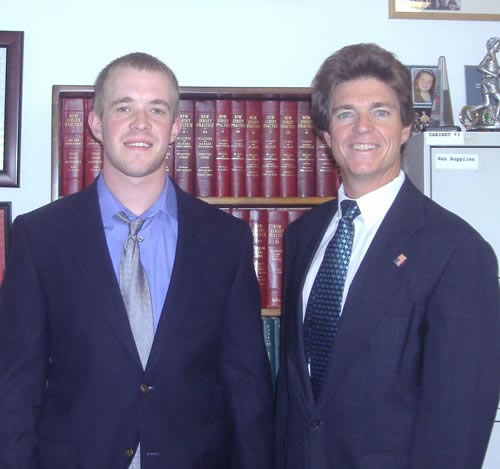
Fall 2007 Law Clerks-New articles, ABA newsletters and Community events
Fall 2007 Law Clerks |

Vita Yablan, Ken Vercammen and Lauren Lopez Vita Yablan Graduate of Horizon Institute of Paralegal Studies. Graduate of Minsk Institute in Belarus. Lauren Lopez Honor Student at Middlesex County College - Paralegal Program
|
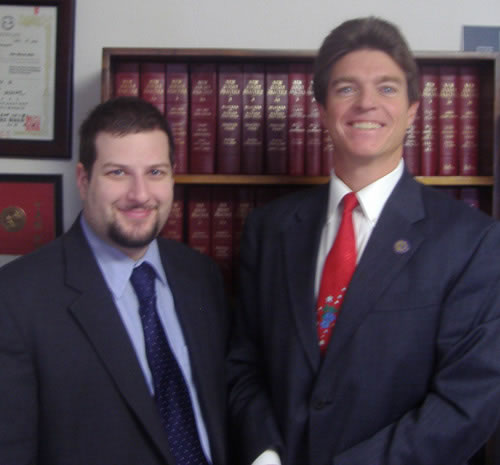
Fall 2006 Law Clerks-New articles, ABA newsletters and Community events
Fall 2006 Law Clerks |
Natalia & Suriti Chaudry
Nick Vaccarella
|

Failure to Type Operators Original Course Date does Not Exclude BAC Reading- New articles, ABA newsletters and Community events
Failure to Type Operators Original Course Date does Not Exclude BAC Reading; State v Sohl 363 NJ Super. 573 (App. Div. 2003) | |||||||||||||||||||||||||||||||||||||||
| |||||||||||||||||||||||||||||||||||||||
NJSA 39:3-29 Failure to Produce License, Registration or Insurance Card-New articles, ABA newsletters and Community events
NJSA 39:3-29 Failure to Produce License, Registration or Insurance Card |
If someone pleads guilty to Failure to produce license, registration or insurance card 39:3-29, they will have to pay fines to the of $150 per violation. The following is the law on Failure to produce license, registration or insurance card 39:3-29 License, registration certificate and insurance identification card; possession; exhibit upon request; violations; fine; defense. 39:3-29. The driver's license, the registration certificate of a motor vehicle and an insurance identification card shall be in the possession of the driver or operator at all times when he is in charge of a motor vehicle on the highways of this State. The driver or operator shall exhibit his driver's license and an insurance identification card, and the holder of a registration certificate or the operator or driver of a motor vehicle for which a registration certificate has been issued, whether or not the holder, driver or operator is a resident of this State, shall also exhibit the registration certificate, when requested so to do by a police officer or judge, while in the performance of the duties of his office, and shall write his name in the presence of the officer, so that the officer may thereby determine the identity of the licensee and at the same time determine the correctness of the registration certificate, as it relates to the registration number and number plates of the motor vehicle for which it was issued; and the correctness of the evidence of a policy of insurance, as it relates to the coverage of the motor vehicle for which it was issued. Any person violating this section shall be subject to a fine of $150, of which $25 shall be deposited in the Uninsured Motorist Prevention Fund established by section 2 of P.L. 1983, c.141 (C.39: 6B-3). If a person charged with a violation of this section can exhibit his driver's license, insurance identification card and registration certificate, which were valid on the day he was charged, to the judge of the municipal court before whom he is summoned to answer to the charge, such judge may dismiss the charge. However, the judge may impose court costs. Amended 2003, c.89, s.78. Conclusion Certain motor vehicle violations can cost you. You will have to pay fines in court. A conviction will require you to pay expensive surcharges to the N.J. MVC [Division of Motor Vehicles] If you have too many points or do not timely pay surcharges, your license will be suspended. Don't give up! The Law Office of Kenneth Vercammen can provide experienced attorney representation for Motor vehicle violations. When your driver's license is in jeopardy, or you are facing thousands of dollars in fines, DMV surcharges and car insurance increases, you need excellent legal representation. If charged with a serious motor vehicle violation, such as Driving While Intoxicated, immediately schedule an in-office appointment with a trial attorney. Don't rely on a real estate attorney, public defender or a family member who simply attended law school. When your driving privileges and ability to drive to work is on the line, hire an experienced attorney. Car insurance companies increase rates or drop customers based on moving violations. The least expensive attorney is not always the answer.
|
NJSA 2C:35-10a1 Possession of CDS or Analog, Failure to Make Lawful Disposition of Drugs-New articles, ABA newsletters and Community events
NJSA 2C:35-10a1 Possession of CDS or Analog, Failure to Make Lawful Disposition of Drugs |
There are a number of viable defenses and arguments which can be pursued to achieve a successful result for someone charged with possession of narcotics (CDS). Advocacy, commitment, and persistence are essential to defending a client accused of involvement with narcotics. Our office represents people charged with crimes. We provide representation throughout New Jersey. Criminal charges can cost you. If convicted, you can face prison, fines over $10,000, jail, probation over 18 months and other penalties. Do not give up! Our Law Office can provide experienced attorney representation for criminal violations. Our website kennethvercammen.com provides information on criminal cases. In New Jersey, there are drug laws that establish Schedules of illegal drugs. New Jersey does not call serious drug offenses "felonies." Instead, they are called "crimes." 2C:35-10. Possession, Use or Being Under the Influence, or Failure to Make Lawful Disposition. a. It is unlawful for any person, knowingly or purposely, to obtain, or to possess, actually or constructively, a controlled dangerous substance or controlled substance analog, unless the substance was obtained directly, or pursuant to a valid prescription or order form from a practitioner, while acting in the course of his professional practice, or except as otherwise authorized by P.L. 1970, c.226 (C.24:21-1 et seq.). Any person who violates this section with respect to: (1) A controlled dangerous substance, or its analog, classified in Schedule I, II, III or IV other than those specifically covered in this section, is guilty of a crime of the third degree except that, notwithstanding the provisions of subsection b. of N.J.S. 2C:43-3, a fine of up to $35,000.00 may be imposed; (2) Any controlled dangerous substance, or its analog, classified in Schedule V, is guilty of a crime of the fourth degree except that, notwithstanding the provisions of subsection b. of N.J.S. 2C:43-3, a fine of up to $15,000.00 may be imposed; (3) Possession of more than 50 grams of marijuana, including any adulterants or dilutants, or more than five grams of hashish is guilty of a crime of the fourth degree, except that, notwithstanding the provisions of subsection b. of N.J.S. 2C:43-3, a fine of up to $25,000.00 may be imposed; or (4) Possession of 50 grams or less of marijuana, including any adulterants or dilutants, or five grams or less of hashish is a disorderly person. Any person who commits any offense defined in this section while on any property used for school purposes which is owned by or leased to any elementary or secondary school or school board, or within 1,000 feet of any such school property or a school bus, or while on any school bus, and who is not sentenced to a term of imprisonment, shall, in addition to any other sentence which the court may impose, be required to perform not less than 100 hours of community service. b. Any person who uses or who is under the influence of any controlled dangerous substance, or its analog, for a purpose other than the treatment of sickness or injury as lawfully prescribed or administered by a physician is a disorderly person. In a prosecution under this subsection, it shall not be necessary for the State to prove that the accused did use or was under the influence of any specific drug, but it shall be sufficient for a conviction under this subsection for the State to prove that the accused did use or was under the influence of some controlled dangerous substance, counterfeit controlled dangerous substance, or controlled substance analog, by proving that the accused did manifest physical and physiological symptoms or reactions caused by the use of any controlled dangerous substance or controlled substance analog. c. Any person who knowingly obtains or possesses a controlled dangerous substance or controlled substance analog in violation of subsection a. of this section and who fails to voluntarily deliver the substance to the nearest law enforcement officer is guilty of a disorderly persons offense. Nothing in this subsection shall be construed to preclude a prosecution or conviction for any other offense defined in this title or any other statute. CONCLUSION If charged with any criminal offense, immediately schedule an appointment with a criminal trial attorney. Do not rely on a real estate attorney, public defender, or a family member who simply attended law school. When your life and job are on the line, hire the best attorney available. |
Failure of Private Prosecutor to Submit Storm Certification Requires Dismissal-New articles, ABA newsletters and Community events
Failure of Private Prosecutor to Submit Storm Certification Requires Dismissal | |||||||||||||||||||||||||||||||||||||||||||||||||||||||||||||||||||||||||||||||||||||||||||||||
| |||||||||||||||||||||||||||||||||||||||||||||||||||||||||||||||||||||||||||||||||||||||||||||||
Failure to Pay Child Support- New articles, ABA newsletters and Community events
Failure to Pay Child Support | |||||||||||||||||||||||||||||||||||||||||||||||||||||||||||||||||||||||||||||||||||||||||||||||||||||||||
The following is a portion of the NJ Court Rules which apply to all child support cases 5:7-5. Failure to Pay; Enforcement by the Court or Party; Income Withholding for Child Support; Suspension and Revocation of Licenses for Failure to Support Dependents; Execution of Assets for Child Support; Child Support Judgments and Post-judgment Interest (a) Contempt and Relief in Aid of Litigant's Rights. If a person fails to make payments or provide health insurance coverage as directed by an order or judgment, the Probation Division responsible for monitoring and enforcing compliance shall notify such person by mail that such failure may result in the institution of contempt proceedings. Upon the accumulation of a support arrearage equal to or in excess of the amount of support payable for 14 days or failure to provide health insurance coverage as ordered, the Probation Division shall file a verified statement setting forth the facts establishing disobedience of the order or judgment. The court in the county in which the person against whom the award is made resides, unless another court is designated by order or Rule 5:7-6(a) otherwise provides, may then, in its discretion, institute contempt proceedings in accordance with Rule 1:10-2, and an aggrieved party, or the Probation Division on that person's behalf, may apply to the court for relief in accordance with Rule 1:10-3. If the aggrieved party states under oath in the application that he or she is indigent and unable to pay the required filing fees, the court, if satisfied of the fact of indigency, may waive the payment of such fees. If the application for relief is made on behalf of a party by the Probation Division, filing fees shall be waived, and may, in the discretion of the court, subsequently be assessed against the adverse party if it is determined that he or she has not complied with the order or judgment being enforced. For past-due alimony or child support payments that have not been docketed as a civil money judgment with the Clerk of the Superior Court, the court may, on its own motion or on motion by the party bringing the enforcement action, assess a late interest charge against the adverse party at the rate prescribed by Rule 4:42-11(a). For past-due child support payments that have been docketed as a civil money judgment, see paragraph g of this Rule. (b) Immediate Income Withholding. All orders that include child support shall be paid through immediate income withholding from the obligor's current and future income unless the parties agree, in writing, to an alternative arrangement or either party shows, and the court finds, good cause for an alternative arrangement. If included in the same order as child support, the court may, in its discretion, garnish a separate amount for alimony, maintenance or spousal support in accordance with N.J.S.A. 2A:17-50 et seq. and include such amount in the immediate income withholding order. (1) Application. Immediate income withholding applies to all orders which include child support that are established or modified on or after October 1, 1990. (2) Procedure. If an order or judgment contains a child support provision, the child support shall be paid through immediate income withholding, and the withholding may include amounts for alimony, maintenance or spousal support, unless the parties agree, in writing, to an alternative arrangement or either party shows and the court finds good cause for an alternative arrangement. The court shall forward the order to the Probation Division which shall prepare and send a Notice to Payor of Income Withholding to the obligor's employer or other source of income. (3) Advance Notice. Every complaint, notice or pleading for the entry or modification of a child support order shall include the following written notice: In accordance with N.J.S.A. 2A:17-56.7 et seq., the child support provisions of a court order are subject to income withholding on the effective date of the order unless the parties agree, in writing, to an alternative arrangement or either party shows and the court finds good cause to establish an alternative arrangement. The income withholding is effective upon all types of income including wages from current and future employment. (c) Initiated Income Withholding. When any child support order that is not subject to immediate income withholding in accordance with paragraph (b) has an accumulated arrearage equal to or exceeding the amount of support payable for 14 days, the Probation Division supervising the support order shall initiate an income withholding against the obligor's current and future income that is subject to income withholding. (1) Application. Initiated income withholding applies to all orders which include child support (a) that are entered prior to October 1, 1990, (b) that are entered or modified after October 1, 1990 which do not include a provision for immediate income withholding or (c) in which the parties have agreed, in writing, to an alternative arrangement and an arrearage equal to or in excess of the amount of support payable for 14 days exists. Initiated income withholding does not apply to alimony, maintenance or spousal support provisions. (2) Procedure. When any order that includes child support is in default in an amount equal to or in excess of the amount of support payable for 14 days, the Probation Division of the County responsible for monitoring and enforcing compliance with the order or judgment shall initiate an income withholding against any of the obligor's income that is subject to income withholding. The Probation Division shall send, by regular mail, a Notice to Obligor of Income Withholding to the obligor's last known address. This notice shall be postmarked no later than 10 days after the date on which the case was identified as having the requisite 14-day arrearage and shall be mailed at the same time as the notice to the payor. The notice shall inform the obligor of the amounts withheld for current support and for the liquidation of arrearages and state that the withholding has commenced. An obligor may contest the withholding only on the basis of mistake of fact. If an obligor objects to the withholding, the Probation Division shall schedule a hearing or administrative review within 20 days after receiving notice of the contest of the withholding. Payment of arrearages after the due date shall not constitute good cause to terminate the withholding. No later than five days after the hearing or administrative review, the Probation Division shall notify the obligor, in writing, whether the withholding shall continue. (3) Advance Notice. All orders that include child support and that are not subject to immediate income withholding as described in paragraph (b) shall include a notice to the obligor stating that: The child support provisions of a support order are subject to income withholding when a child support arrearage has accrued in an amount equal to or in excess of the amount of support payable for 14 days. The withholding is effective against the obligor's current and future income from all sources authorized by law. (d) Rules Applicable to All Withholdings. The income withholding shall be binding on the obligor's employer or other source of income and successive payors of the obligor's income immediately after service of the Notice to Payor of Income Withholding upon the payor of such income. An employer or other source of income is not required to alter normal pay cycles to comply with the withholding but shall withhold and forward the required amount beginning with the first pay period that ends immediately after the notice is postmarked and each time the obligor is paid thereafter. The Notice to Payor of Income Withholding shall state that the payor of the obligor's income, except for the Division of Unemployment and Temporary Disability, may deduct a fee of $1.00 for each payment. Such fee shall be deducted from the obligor's income in addition to the amount withheld for child support. The total amount of the withholding shall not exceed the maximum amount permitted under section 303(b) of the federal Consumer Credit Protection Act (15 U.S.C. 1673(b)). If the court modifies any support order based upon changed circumstances, the Probation Division shall notify the payor to change the income withholding accordingly. When the Probation Division is unable to locate the obligor's current employer or other source of income to effectuate an income withholding, it may use any other procedures authorized by law to obtain this information. An income withholding for child support shall have priority over all other legal processes under State law without regard to the date of entry. If the obligor has more than one support order subject to withholding, the employer or other source of income shall withhold the payments on a pro-rata basis. The income withholding shall remain in effect until such time as the court enters an order to the contrary and the Probation Division delivers a Notice of Termination of Income Withholding to the employer or other source of income. An employer may not use an income withholding as a basis for discharge, discipline or discrimination in hiring. An aggrieved obligor may institute court action against the employer or other source of income as set forth in N.J.S.A. 2A:17-56.12. If the obligor's source of income fails to comply with a Notice to Payor of Income Withholding, it is liable for amounts that should have been withheld. The employer or other source of income shall notify the Probation Division promptly upon termination of the obligor's employment. If an employer or other source of income fails to comply with the terms of the income withholding or any withholding provision in this paragraph, the court may, upon application of the Probation Division, issue an Order to Show Cause for Contempt against the payor and proceed with contempt proceedings under Rule 1:10-3. The forms and notices required herein shall be prescribed by the Administrative Director of the Courts. (e) Suspension and Revocation of Licenses for Failure to Support Dependents. (1) General Provisions. If a child support arrearage equals or exceeds the amount of child support payable for six months, or court-ordered health care coverage for a child is not provided within six months of the date that it is ordered, or the obligor fails to respond to a subpoena relating to a paternity or child support action, or a warrant for the obligor's arrest has been issued by the court due to the failure to pay child support as ordered, failure to appear at a hearing to establish paternity or child support, or failure to appear at a child support hearing to enforce a child support order, and said warrant remains outstanding, and the obligor is found to possess a license in the State of New Jersey, including a license to practice law, and attempts to enforce the support provisions through income withholding, withholding of civil lawsuit awards, and the execution of assets, when available, have been exhausted, the Probation Division shall send a written notice to the obligor, by certified and regular mail, return receipt requested, at the obligor's last-known address or place of business or employment, stating that the obligor's licenses may be revoked or suspended unless, within 30 days of the postmark date of the notice, the obligor pays the full amount of past-due child support, or provides proof that health care coverage for the child has been obtained, or responds to a subpoena, or makes a written request for a court hearing to the Probation Division. If a child support-related warrant exists, the license revocation or suspension will be terminated if the obligor pays the full amount of the child support arrearage, provides proof that health care coverage for the child has been obtained, or surrenders to the county sheriff or the Probation Division. No license revocation action shall be initiated if the Probation Division has received notice that the obligor has pending a motion to modify the child support order if that motion was filed prior to the date that the notice of the license suspension or revocation was sent by the Probation Division. If the court issues a warrant for the obligor's arrest for failure to pay child support as ordered, or for failure to appear at a hearing to establish paternity or child support, or for failure to appear at a child support hearing to enforce a child support order, and said warrant remains outstanding, the Probation Division shall immediately notify the Division of Motor Vehicles of the warrant and the requirement to suspend the obligor's driving privileges pursuant to N.J.S.A. 2A:17-56.41. (2) Suspension by Default of the Obligor. If, after receiving notice of a proposed license suspension or revocation, the obligor fails to take one of the actions specified in paragraph (e)(1) of this Rule, the Probation Division shall provide the court with a certification setting forth the obligor's non-compliance and failure to respond to the written notice of the pending license revocation or suspension as well as proof of service of the written notice of license suspension or denial. If, based on the papers filed by the Probation Division, the court is satisfied that service on the obligor was effective as set forth below, it shall, without need for further due process or hearing, enter an order suspending or revoking all licenses held by the obligor except that if the obligor is an attorney licensed to practice law in New Jersey, the order shall notify the Supreme Court to suspend the obligor's license to practice law. (3) Service of the Notice of Proposed License Suspension or Revocation. For the purpose of license suspensions or revocations initiated in accordance with this paragraph, simultaneous certified and regular mailing of the written notice shall constitute effective service. The court may deem procedural due process requirements for notice and service of process to be met with respect to a party thereto upon delivery of written notice to the most recent residential or employer address filed with the Probation Division for that party. If a party fails to respond to a notice and no proof is available that the party received the notice, the Probation Division shall document to the court that it has made a diligent effort to locate the party by making inquiries that may include, but are not limited to: the United States Postal Service, the Division of Motor Vehicles in the Department of Transportation, the Division of Taxation in the Department of the Treasury, the Department of Corrections, and the Department of Labor. The Probation Division shall provide an affidavit to the court presenting such documentation of its diligent effort, which certifies its inability to locate the party. If the United States Postal Service returns the mail to the Probation Division within the 30-day response period marked "moved, unable to forward," "addressee not known," "no such number/street," "insufficient address," or "forwarding order expired," the court may deem procedural due process requirements for notice and service of process to be met upon a finding that the Probation Division has provided the affidavit documenting the diligent effort to locate the party. If the certified mail is returned for any other reason without the return of the regular mail, the regular mail service shall constitute effective service. If the mail is addressed to the obligor at the obligor's place of business or employment, with postal instructions to deliver to the addressee only, service will be deemed effective only if the signature on the return receipt appears to be that of the obligor. Acceptance of certified mail notice signed by the obligor, the obligor's attorney, or a competent member of the obligor's household above the age of 14 shall be deemed effective service. (4) License Suspension or Revocation Hearings. If the obligor requests a hearing, the Probation Division shall file a petition for a court hearing, which shall occur within 45 days of the obligor's request. If, at or prior to the hearing, the obligor pays the full amount of the child support arrearage or provides proof that health care coverage for the child has been obtained or responds to the subpoena or surrenders to the county sheriff or the Probation Division, the license revocation process shall be terminated. The court shall suspend or revoke the obligor's licenses (if the obligor is an attorney licensed to practice law in New Jersey, the order shall notify the Supreme Court to suspend the obligor's license to practice law) if it finds that: (a) all appropriate enforcement methods have been exhausted, (b) the obligor is the holder of a license, (c) the requisite child support arrearage amount exists or health care coverage for the child has not been provided as ordered, (d) no motion to modify the child support order, filed prior to the date that the notice of the license suspension or revocation was sent by the Probation Division, is pending before the court, and (e) there is no equitable reason, such as involuntary unemployment, disability, or compliance with a court-ordered plan for the periodic payment of the child support arrearage amount, for the obligor's non-compliance with the child support order. If the court is satisfied that these conditions exist, it shall first consider suspending or revoking the obligor's driver's license prior to a professional or occupational license. If the obligor fails to appear at the hearing after being properly served with notice, the court shall order the suspension or revocation of all licenses held by the obligor except that if the obligor is an attorney licensed to practice law in New Jersey, the order shall notify the Supreme Court to suspend the obligor's license to practice law. In the case of a driver's license, if the court finds that the license revocation or suspension will result in a significant hardship to the obligor, to the obligor's legal dependents under 18 years of age living in the obligor's household, to the obligor's employees, or to persons, businesses, or entities to whom the obligor provides goods or services, the court may allow the obligor to pay 25% of the past-due child support amount within three working days of the hearing, establish a payment schedule to satisfy the remainder of the arrearages within one year, and require that the obligor comply with any current child support obligation. If the obligor agrees to this arrangement, no suspension or revocation of any licenses shall be ordered. Compliance with the payment agreement shall be monitored by the Probation Division. If the obligor has good cause for not complying with the payment agreement within the time permitted, the obligor shall immediately file a motion with the court and the Probation Division requesting an extension of the payment plan. The court may extend the payment plan if it is satisfied that the obligor has made a good faith effort to comply with the plan and is unable to satisfy the full amount of past-due support within the time permitted due to circumstances beyond the obligor's control. In no case shall a payment plan extend beyond the date that the dependent child reaches the age of 18. If the obligor fails to comply with the court-ordered payment schedule, the court shall, upon receipt of a certification of non-compliance from the Probation Division, and without further hearing, order the immediate revocation or suspension of all licenses held by the obligor. If the obligor is an attorney licensed to practice law in New Jersey, the order shall notify the Supreme Court to suspend the obligor's license to practice law. If required by existing law or regulation, the court shall order that the obligor surrender the license to the issuing authority within 30 days of the date of the order. (5) Transmittal of Order Suspending or Revoking License. If the court issues an order suspending or revoking a license pursuant to paragraph (e) of this Rule, the Probation Division shall forward a copy of the order to the obligor and all appropriate licensing authorities. If the order notifies the Supreme Court to suspend a license to practice law in New Jersey, the Probation Division shall forward the order to the Clerk of the Supreme Court and a copy to the Director of the Office of Attorney Ethics. The suspension of a license to practice law in the State of New Jersey pursuant to paragraph (e) of this Rule, shall be governed by R. 1:20-11A. (6) Relief From Suspension or Revocation Due to Mistaken Identity. If the licensee, upon receipt of the notice of suspension or revocation from the licensing authority, disputes that he or she is the obligor, the licensee shall notify the licensing authority and the Probation Division by registered mail within 20 days of the postmark date of the notice and request a hearing. Upon receipt of the licensee's request for a hearing, the Probation Division shall determine if the licensee is the obligor. If the Probation Division determines that the licensee is not the obligor, the Probation Division shall so notify the licensee and the licensing authority. If the Probation Division determines that the licensee is the obligor and the licensee still disputes this finding, the Probation Division shall file a petition for a court hearing to resolve the issue. The hearing shall be held within 30 days of the date that the Probation Division determines that a hearing is required. If a hearing is held to determine if the licensee is the obligor, the Probation Division shall notify the licensing authority of the court's finding. (7) Term of Suspension/Restoration of License. A license suspension or revocation ordered by the court remains in effect until the obligor files with the licensing authority either a court order restoring the license or a Probation Division certification attesting to the full satisfaction of the child support arrearage. Within three working days of the full payment of the child support arrearage, the Probation Division shall provide the court with a certification stating that the obligor has satisfied the past-due child support amount. Upon receipt of the certification, the court shall issue an order restoring the obligor's licenses. The Probation Division shall immediately forward the restoration order or certification to the obligor. The obligor is responsible for filing the court order or Probation certification with the licensing authority. If a license to practice law in New Jersey was suspended by the Supreme Court pursuant to R. 1:20-11A, the attorney shall forward the Chancery Division, Family Part order that recommends the restoration of the license to the Clerk of the Supreme Court and a copy of the order to the Director of the Office of Attorney Ethics. The reinstatement of a license to practice law in New Jersey shall be governed by R. 1:20-11A. When the court issues an order to vacate a child support-related warrant or local law enforcement authorities execute the warrant, the Probation Division shall send a certification or the court's order to the obligor and to the Division of Motor Vehicles indicating that the child support-related warrant is no longer effective. The Division of Motor Vehicles, upon receipt of the order or certification, may reinstate the obligor's driving privileges, provided that the obligor pays the Division's restoration fee. (f) Execution on Assets to Collect Alimony and Child Support. If an order is issued pursuant to R. 4:59-1(b) authorizing the Probation Division to execute on cash or cash-equivalent assets as defined therein to collect alimony and child support judgments payable through the Probation Division, the Probation Division may assist judgment creditors by preparing the writ of execution, serving the writ on the holder of the debtor's asset by registered or certified mail, and scheduling the matter before the court to obtain an order to turn over funds. Service of the writ shall freeze the asset for the amount of the judgment, but no turnover of funds shall be made or required to be made until ordered by the court. The writ of execution shall be signed by the judgment creditor or the attorney for the judgment creditor and may, subject to the limitations of this rule, be issued by the Vicinage Chief Probation Officer acting as deputy clerk of the Superior Court pursuant to R. 4:59-1(b). The Probation Division shall mail a notice to the debtor as required by R. 4:59-1(g) immediately after the writ has been served on the holder of the asset. The Probation Division shall send a copy of all writs of execution issued pursuant to R. 4:59-1(b) to the Family Division Case Management Office. No costs or fees shall be assessed by the Probation Division for aiding in the execution of a judgment for alimony or child support. With respect to assets other than cash or cash-equivalents as defined in R. 4:59-1(b), the Probation Division may assist the judgment creditor in preparing the writ of execution and such other forms relating to the execution as may be required, and in referring the judgment creditor to the sheriff of the county where the asset is located. (g) Child Support Judgments and Post-judgment Interest. In accordance with N.J.S.A. 2A:17-56.23a, past-due child support payments are a judgment by operation of law on or after the date due and are subject to post-judgment interest at the rates prescribed in Rule 4:42-11 at the time of satisfaction or execution. Past-due child support payable through the Probation Division shall be automatically docketed as civil judgments with the Clerk of the Superior Court on the first day of the month following the date the payment was due. The Probation Division may, with the authorization of a child support judgment creditor, assist that party in calculating post-judgment interest in accordance with Rule 4:42-11 at the time an offer of satisfaction is tendered or an execution of assets is initiated. For child support that is not payable through the Probation Division, the obligee shall file a motion with the court asking that the amount of past-due child support be fixed and that a judgment be entered for that amount. The obligee shall be responsible for filing the judgment with the Clerk of the Superior Court. Alternatively, the obligee may procure a judgment by filing an application with the Probation Division requesting that past-due and future child support payments be made through that office in accordance with Rule 5:7-4(b). 5:7-6. Consolidated Enforcement and Modification Proceedings (a) Where an order or judgment requires payment of support or alimony through a probation office in a county other than the county of venue and where motions are pending both for modification and enforcement of the order or judgment, all such motions shall be heard in the county of venue. Prior to such hearing, the amount of arrearages shall be fixed in the county where payments are required to be made either by certification of the probation office or, if its certification is contested, by the court in that county. Where motions are pending both for modification and enforcement, a certification of arrears shall be forwarded by the probation office to the court of original venue seven (7) days prior to the return date. (b) Where any judgment requires payment through a probation office, all motions for modification or enforcement shall be served by both regular and certified mail upon the probation office in that county as if it were a party to the action. 5:7-7. Delay in Prosecution: Order to Proceed In divorce and nullity actions, a party either resisting an order of dismissal pursuant to R. 1:13-7 or seeking an order to proceed after such dismissal shall file an affidavit stating the reason for the delay, the relations of the parties toward each other since the commencement of the action, and any agreements or understandings between them. 5:7-8. Bifurcation Bifurcation of trial of the marital dissolution or custody dispute from trial of disputes over support and equitable distribution shall be permitted only with the approval of the Family Presiding Judge, which approval shall be granted only in extraordinary circumstances and for good cause shown. The following is a portion of the additional information we need to draft a Motion:
MISCELLANEOUS INFORMATION: 1. Name and Address of Your Employer (Provide Name and Address of Company if Self- Employed)
BRIEF DESCRIPTION OF SPECIFIC PROBLEMS OR CONCERN?_____________________________________________________ _____________________________________________________________________________________________________________ _____________________________________________________________________________________________________________ _____________________________________________________________________________________________________________ The above information is a brief outline of work an experienced attorney can do for you. Always schedule an in- office consultation whenever an important legal matter arises. | |||||||||||||||||||||||||||||||||||||||||||||||||||||||||||||||||||||||||||||||||||||||||||||||||||||||||