Endangering a Child |
NJSA 9:6-1. Abuse, abandonment, cruelty and neglect of child; what constitutes 9:6-1. Abuse, abandonment, cruelty and neglect of child; what constitutes. Abuse of a child shall consist in any of the following acts: (a) disposing of the custody of a child contrary to law; (b) employing or permitting a child to be employed in any vocation or employment injurious to its health or dangerous to its life or limb, or contrary to the laws of this State; (c) employing or permitting a child to be employed in any occupation, employment or vocation dangerous to the morals of such child; (d) the habitual use by the parent or by a person having the custody and control of a child, in the hearing of such child, of profane, indecent or obscene language; (e) the performing of any indecent, immoral or unlawful act or deed, in the presence of a child, that may tend to debauch or endanger or degrade the morals of the child; (f) permitting or allowing any other person to perform any indecent, immoral or unlawful act in the presence of the child that may tend to debauch or endanger the morals of such child; (g) using excessive physical restraint on the child under circumstances which do not indicate that the child's behavior is harmful to himself, others or property; or (h) in an institution as defined in section 1 of P.L. 1974, c. 119 (C. 9:6-8.21), willfully isolating the child from ordinary social contact under circumstances which indicate emotional or social deprivation. Abandonment of a child shall consist in any of the following acts by anyone having the custody or control of the child: (a) willfully forsaking a child; (b) failing to care for and keep the control and custody of a child so that the child shall be exposed to physical or moral risk without proper and sufficient protection; (c) failing to care for and keep the control and custody of a child so that the child shall be liable to be supported and maintained at the expense of the public, or by child caring societies or private persons not legally chargeable with its or their care, custody and control. Cruelty to a child shall consist in any of the following acts: (a) inflicting unnecessarily severe corporal punishment upon a child; (b) inflicting upon a child unnecessary suffering or pain, either mental or physical; (c) habitually tormenting, vexing or afflicting a child; (d) any willful act of omission or commission whereby unnecessary pain and suffering, whether mental or physical, is caused or permitted to be inflicted on a child; (e) or exposing a child to unnecessary hardship, fatigue or mental or physical strains that may tend to injure the health or physical or moral well-being of such child. Neglect of a child shall consist in any of the following acts, by anyone having the custody or control of the child: (a) willfully failing to provide proper and sufficient food, clothing, maintenance, regular school education as required by law, medical attendance or surgical treatment, and a clean and proper home, or (b) failure to do or permit to be done any act necessary for the child's physical or moral well-being. Neglect also means the continued inappropriate placement of a child in an institution, as defined in section 1 of P.L. 1974, c. 119 (C. 9:6-8.21), with the knowledge that the placement has resulted and may continue to result in harm to the child's mental or physical well-being. 9:6-1.1. Treatment of ill children according to religious tenets of church The article to which this act is a supplement shall not be construed to deny the right of a parent, guardian or person having the care, custody and control of any child to treat or provide treatment for an ill child in accordance with the religious tenets of any church as authorized by other statutes of this State; provided , that the laws, rules, and regulations relating to communicable diseases and sanitary matters are not violated. 9:6-2 "Parent" and "custodian" defined. 9:6-2. "Parent", as used in this chapter, shall include the stepfather and stepmother and the adoptive or resource family parent. "The person having the care, custody and control of any child", as used in this chapter, shall mean any person who has assumed the care of a child, or any person with whom a child is living at the time the offense is committed, and shall include a teacher, employee or volunteer, whether compensated or uncompensated, of an institution as defined in section 1 of P.L. 1974, c.119 (C.9:6-8.21) who is responsible for the child's welfare, and a person who legally or voluntarily assumes the care, custody, maintenance or support of the child. Custodian also includes any other staff person of an institution regardless of whether or not the person is responsible for the care or supervision of the child. Custodian also includes a teaching staff member or other employee, whether compensated or uncompensated, of a day school as defined in section 1 of P.L. 1974, c.119 (C.9:6-8.21). Amended 1987, c.341, s.2; 2004, c.130, s.20. 9:6-3. Cruelty and neglect of children; crime of fourth degree; remedies 9:6-3. Any parent, guardian or person having the care, custody or control of any child, who shall abuse, abandon, be cruel to or neglectful of such child, or any person who shall abuse, be cruel to or neglectful of any child shall be deemed to be guilty of a crime of the fourth degree. If a fine be imposed, the court may direct the same to be paid in whole or in part to the parent, or to the guardian, custodian or trustee of such minor child or children; provided, however, that whenever in the judgment of the court it shall appear to the best interest of the child to place it in the temporary care or custody of a society or corporation, organized or incorporated under the laws of this State, having as one of its objects the prevention of cruelty to children, and the society or corporation is willing to assume such custody and control, the court may postpone sentence and place the child in the custody of such society or corporation, and may place defendant on probation, either with the county probation officers or an officer of the society or corporation to which the child is ordered, and may order the parent, guardian or person having the custody and control of such child to pay to such society or corporation a certain stated sum for the maintenance of such child. When, however, a child is so placed in the custody of such society or corporation, and defendant fails to make the payments as ordered by the court, the court shall cause the arrest and arraignment before it of such defendant, and shall impose upon the defendant the penalty provided in this section. 2C:24-4 Endangering welfare of children. "Child" means any person under 16 years of age. |
Monday, July 18, 2011
Endangering a Child - New articles, ABA newsletters and Community events

Employment Law - New articles, ABA newsletters and Community events
Employment Law |
Reinaldo Carmona v. Resorts International Hotel, Inc. (A-83-05) - Decided February 21, 2007 RIVERA-SOTO, J., writing for the majority of the Court. In this appeal, the Court must determine: 1) whether an employee’s complaint for retaliation under the Law Against Discrimination (LAD) must be made in good faith and on a reasonable basis; and 2) whether an investigative report prepared by an employer, which the employer claims provided an independent basis for the employee’s discharge, should have been admitted into evidence. Plaintiff Reinaldo Carmona was hired as a front desk clerk by defendant Resorts International Hotel Inc. On November 9, 2001, Carmona was fired. The reason for his termination gave rise to this lawsuit. According to Carmona, he was a recovering cocaine user prone to relapses. Because of the relapses, he missed work on several occasions. Under Resorts’ progressive discipline, the absences accumulated as “points” against Carmona. By August 2001, Carmona had accumulated enough points so that another unexplained absence would render him liable for termination. While Carmona could have explored seeking an approved medical leave to treat his cocaine dependency, he focused instead on other Resorts employees who had received approved medical leave absences, claiming that Resorts applied its absenteeism/termination policy unevenly due to racism. On November 6, 2001, Carmona went to Resorts’ internal equal employment opportunity (EEO) office to complain. Resorts’ EEO director informed Carmona that she would conduct an investigation of his allegations. On November 5, 2001, the day before Carmona complained to Resorts’ EEO office, he and William Santiago were observed improperly upgrading rooms in exchange for tips. Twice before, Carmona had been reprimanded for upgrading rooms without authorization. Santiago was interviewed, during which he admitted that he had upgraded rooms for gratuities. Santiago also implicated Carmona. On November 8, 2001, Resorts conducted an audit that showed that Carmona had improperly and without authorization upgraded twenty-seven rooms in October 2001. When questioned on November 9, 2001, Carmona admitted to upgrading rooms without authorization, although he denied receiving gratuities. He was fired that day. Resorts investigators collected their investigative material and compiled a report concerning the incident. In April 2002, Carmona sued Resorts. The issues at trial, according to Carmona, were whether Resorts retaliated against him when it terminated him three days after he filed his discrimination complaint against Resorts and whether Resorts’ investigation into the room upgrades was a pretext to justify that retaliation. At trial, Resorts sought to introduce the investigative report into evidence. Carmona objected, and the trial court ruled that the report was not admissible because it was hearsay and unreliable. The trial court refused to instruct the jury that in addition to making a complaint of discrimination, Carmona had to have a reasonable good faith basis for the complaint. Instead, the trial court instructed the jury that to satisfy his burden of proof, Carmona must prove that he made a complaint of discrimination and that he was retaliated against because of that filing. The jury found that Carmona proved that the reason Resorts gave for Carmona’s termination was a pretext and the real reason was retaliation for his complaint of discrimination. The jury awarded Carmona compensatory damages and lost wages. On appeal, the Appellate Division affirmed. This Court granted Resorts’ petition for certification. The LAD is one of New Jersey’s leading legislative pronouncements, which sets forth the clear public policy of this State to eradicate invidious discrimination from the workplace. In the development of this State’s anti-discrimination jurisprudence, the Court has frequently looked to case law under the federal Title VII of the Civil Rights Act for guidance in developing standards to govern the resolution of LAD claims. The Court’s continuing examination of the LAD has led it also to look to subsequent legislative enactments for guidance on LAD’s scope, including the later-adopted New Jersey Conscientious Employee Protection Act (CEPA). A CEPA plaintiff must show that he reasonably believed that his employer’s conduct was violating either a law, rule, or regulation promulgated pursuant to law or a clear mandate of public policy. (pp. 17-20) A requirement that a LAD-retaliation plaintiff demonstrate that his underlying complaint was reasonable and in good faith is entirely consonant with the purpose of the LAD. The Court follows parallel federal precedents, under which a plaintiff must show that he had a reasonable, good-faith belief that discrimination occurred to prevail on a retaliation claim, a tenet universally observed by every United States Court of Appeals that has considered the question. (pp. 20-21) This requirement that the underlying complaint be reasonable and made in good faith is recognized because its absence may well lead to abuse. The LAD was and is intended as a shield to protect employees from the wrongful acts of their employers, and not as a sword to be wielded by a savvy employee against his employer. Here, Resorts was denied an instruction to the jury to the effect that, as part of his case-in-chief, Carmona was required to prove that he had a reasonable, good-faith belief for his underlying discrimination complaint as the basis for his later retaliation complaint. Carmona did not complain about discrimination in the application of Resorts’ absenteeism policy until November 6, 2001, the day after an investigation into allegations of theft by Carmona was started. The trial court charged the jury that the bare fact that Carmona filed a complaint alleging discrimination, without more, was sufficient to satisfy his burden in respect of the first element of his LAD-retaliation claim, a charge that the Court holds to be legally insufficient and incorrect. The jury could have come to a different result had it been correctly instructed. (pp. 23-25) An investigative report concerning an employee is admissible as non-hearsay evidence whenever the employer’s motivations are directly at issue. Moreover, in the context of a LAD retaliation claim, a personnel file was admissible because the information in the file bears on the reasonableness and good faith of defendant’s conduct. There is no appreciable difference between a personnel file -- which is created and maintained exclusively by the employer -- and an investigative report. Further support is found in federal cases that parallel the LAD. Other states also follow this rule. (pp. 25-30) Resorts’ investigative report would be admissible to show that Resorts terminated Carmona’s employment for non-pretextual reasons, provided Resorts also demonstrates (1) that one of its decision makers knew of the report’s contents and acted in reliance thereon, and (2) that all portions of the report were separately admissible or properly and intelligibly redacted. (pp. 30-31) The judgment of the Appellate Division is REVERSED and REMANDED for proceedings consistent with this opinion. JUSTICE WALLACE has filed a separate, DISSENTING, opinion, concluding that the Court should not impose a new standard that requires an employee to establish that the complaint for retaliation was made in good faith and on a reasonable basis. JUSTICES LONG, LaVECCHIA, ZAZZALI and ALBIN join in JUSTICE RIVERA-SOTO’s opinion. JUSTICE WALLACE filed a separate, DISSENTING opinion.
A- 83
Plaintiff-Respondent, and WILLIAM SANTIAGO, Plaintiff, v. RESORTS INTERNATIONAL HOTEL, INC., d/b/a RESORTS ATLANTIC CITY, Defendant-Appellant. Decided February 21, 2007 |
Embezzlement - New articles, ABA newsletters and Community events
Embezzlement |
New Jersey does not have a specific embezzlement law. In New Jersey, the statutes uses the word "theft", rather than embezzlement or larceny. If someone is criminally indicted for theft, at trial the judge will read to the jurors the following jury instructions of the law: The following charge is to be used when the factual circumstances indicate an unlawful taking of personal property, and the value of the property is in dispute. In other instances, reference must be made to 2C:20-2b to determine the degree of theft. See Charge #2.291 on GRADATION OF THEFT OFFENSES. (Note that 2C:20-2b(2) makes some offenses of the third degree regardless of the value of the property). The statute, on which the indictment is based is, 2C:20-3a, which reads in its pertinent part as follows: A person is guilty of theft if he unlawfully takes, or exercises control over movable property of another with purpose to deprive him thereof. The jury cannot find the defendant guilty unless the jury determines that the State has proven the following two elements beyond a reasonable doubt: First, the State must prove that the defendant unlawfully took (here describe property listed in indictment). In order to prove an unlawful taking, the State need not prove that the property was carried out of the place in which it was kept, but only that it was moved or taken from its original location. If the defendant is found with the stolen property shortly after it was taken, charge the jury that it may draw an inference that the defendant took the property. Second, the State must prove that at the time the defendant took this property (his/her) purpose was to deprive the owner of the (here describe property) With regard to the requirement of proof of a purpose to deprive another of (his/her) property, you are instructed that a person acts purposely with respect to the nature of (his/her) conduct or a result thereof if it is (his/her) conscious object to engage in conduct of that nature or to cause such a result. In other words, in order for the jury to find that the defendant acted purposely, the State must prove beyond a reasonable doubt that at the time the defendant took the property it was (his/her) conscious object to deprive (the owner) of (describe property). (If appropriate, insert relevant portions of the following definition.) "Deprive" means (1) to withhold (or cause to be withheld) property of another permanently or for so extended a period as to appropriate a substantial portion of its economic value...or, (2) to dispose (or cause disposal) of the property so as to make it unlikely that the owner will recover it). Thus, if the jury finds, after careful consideration of all of the evidence that the State has proven beyond a reasonable doubt each of the elements as I have explained them, then your verdict should be guilty. However, if the State has not proven each of the elements described above to the jury's satisfaction beyond a reasonable doubt, then the jury's verdict should be not guilty. The following are the theft statutes in New Jersey: 2C:20-1. Definitions. In chapters 20 and 21, unless a different meaning plainly is required: a. "Deprive" means: (1) to withhold or cause to be withheld property of another permanently or for so extended a period as to appropriate a substantial portion of its economic value, or with purpose to restore only upon payment of reward or other compensation; or (2) to dispose or cause disposal of the property so as to make it unlikely that the owner will recover it. b. "Fiduciary" means an executor, general administrator of an intestate, administrator with the will annexed, substituted administrator, guardian, substituted guardian, trustee under any trust, express, implied, resulting or constructive, substituted trustee, executor, conservator, curator, receiver, trustee in bankruptcy, assignee for the benefit of creditors, partner, agent or officer of a corporation, public or private, temporary administrator, administrator, administrator pendente lite, administrator ad prosequendum, administrator ad litem or other person acting in a similar capacity. c. "Financial institution" means a bank, insurance company, credit union, savings and loan association, investment trust or other organization held out to the public as a place of deposit of funds or medium of savings or collective investment. d. "Government" means the United States, any state, county, municipality, or other political unit, or any department, agency or subdivision of any of the foregoing, or any corporation or other association carrying out the functions of government. e. "Movable property" means property the location of which can be changed, including things growing on, affixed to, or found in land, and documents, although the rights represented thereby have no physical location. "Immovable property" is all other property. f. "Obtain" means: (1) in relation to property, to bring about a transfer or purported transfer of a legal interest in the property, whether to the obtainer or another; or (2) in relation to labor or service, to secure performance thereof. g. "Property" means anything of value, including real estate, tangible and intangible personal property, trade secrets, contract rights, choses in action and other interests in or claims to wealth, admission or transportation tickets, captured or domestic animals, food and drink, electric, gas, steam or other power, financial instruments, information, data, and computer software, in either human readable or computer readable form, copies or originals. h. "Property of another" includes property in which any person other than the actor has an interest which the actor is not privileged to infringe, regardless of the fact that the actor also has an interest in the property and regardless of the fact that the other person might be precluded from civil recovery because the property was used in an unlawful transaction or was subject to forfeiture as contraband. Property in possession of the actor shall not be deemed property of another who has only a security interest therein, even if legal title is in the creditor pursuant to a conditional sales contract or other security agreement. i. "Trade secret" means the whole or any portion or phase of any scientific or technical information, design, process, procedure, formula or improvement which is secret and of value. A trade secret shall be presumed to be secret when the owner thereof takes measures to prevent it from becoming available to persons other than those selected by the owner to have access thereto for limited purposes. j. "Dealer in property" means a person who buys and sells property as a business. k. "Traffic" means: (1)To sell, transfer, distribute, dispense or otherwise dispose of property to another person; or (2)To buy, receive, possess, or obtain control of or use property, with intent to sell, transfer, distribute, dispense or otherwise dispose of such property to another person. l. "Broken succession of title" means lack of regular documents of purchase and transfer by any seller except the manufacturer of the subject property, or possession of documents of purchase and transfer by any buyer without corresponding documents of sale and transfer in possession of seller, or possession of documents of sale and transfer by seller without corresponding documents of purchase and transfer in possession of any buyer. m. "Person" includes any individual or entity or enterprise, as defined herein, holding or capable of holding a legal or beneficial interest in property. n. "Anything of value" means any direct or indirect gain or advantage to any person. o. "Interest in property which has been stolen" means title or right of possession to such property. p. "Stolen property" means property that has been the subject of any unlawful taking. q. "Enterprise" includes any individual, sole proprietorship, partnership, corporation, business trust, association, or other legal entity, and any union or group of individuals associated in fact, although not a legal entity, and it includes illicit as well as licit enterprises and governmental as well as other entities. r. "Attorney General" includes the Attorney General of New Jersey, his assistants and deputies. The term shall also include a county prosecutor or his designated assistant prosecutor, if a county prosecutor is expressly authorized in writing by the Attorney General to carry out the powers conferred on the Attorney General by this chapter. s. "Access device" means property consisting of any telephone calling card number, credit card number, account number, mobile identification number, electronic serial number, personal identification number, or any other data intended to control or limit access to telecommunications or other computer networks in either human readable or computer readable form, either copy or original, that can be used to obtain telephone service. t. "Defaced access device" means any access device, in either human readable or computer readable form, either copy or original, which has been removed, erased, defaced, altered, destroyed, covered or otherwise changed in any manner from its original configuration. u. "Domestic companion animal" means any animal commonly referred to as a pet or one that has been bought, bred, raised or otherwise acquired, in accordance with local ordinances and State and federal law for the primary purpose of providing companionship to the owner, rather than for business or agricultural purposes. v. "Personal identifying information" means any name, number or other information that may be used, alone or in conjunction with any other information, to identify a specific individual and includes, but is not limited to, the name, address, telephone number, date of birth, social security number, official State issued identification number, employer or taxpayer number, place of employment, employee identification number, demand deposit account number, savings account number, credit card number, mother's maiden name, unique biometric data, such as fingerprint, voice print, retina or iris image or other unique physical representation, or unique electronic identification number, address or routing code of the individual. 2C:20-1.1. Offense involving access device; presumption of unlawful purpose 6. In any prosecution for an offense enumerated in chapter 20 of Title 2C of the New Jersey Statutes involving a defaced access device, any removal, erasure, defacement, alteration, destruction, covering or other change in such access device from its original configuration performed by any person other than an authorized manufacturer of, or service provider to access devices shall be presumed to be for an unlawful purpose. 2C:20-2. Consolidation of Theft Offenses; Grading; Provisions Applicable to Theft Generally. a. Consolidation of Theft and Computer Criminal Activity Offenses. Conduct denominated theft or computer criminal activity in this chapter constitutes a single offense, but each episode or transaction may be the subject of a separate prosecution and conviction. A charge of theft or computer criminal activity may be supported by evidence that it was committed in any manner that would be theft or computer criminal activity under this chapter, notwithstanding the specification of a different manner in the indictment or accusation, subject only to the power of the court to ensure fair trial by granting a bill of particulars, discovery, a continuance, or other appropriate relief where the conduct of the defense would be prejudiced by lack of fair notice or by surprise. b. Grading of theft offenses. (1)Theft constitutes a crime of the second degree if: (a)The amount involved is $75,000.00 or more; (b)The property is taken by extortion; (c)The property stolen is a controlled dangerous substance or controlled substance analog, as defined in N.J.S. 2C:35-2 and the quantity is in excess of one kilogram; (d)The property stolen is a person's benefits under federal or State law, or from any other source, which the Department of Human Services or an agency acting on its behalf has budgeted for the person's health care and the amount involved is $75,000 or more; or (e)The property stolen is human remains or any part thereof. (2)Theft constitutes a crime of the third degree if: (a)The amount involved exceeds $500.00, but is less than $75,000.00; (b)The property stolen is a firearm, motor vehicle, vessel, boat, horse, domestic companion animal or airplane; (c)The property stolen is a controlled dangerous substance or controlled substance analog as defined in N.J.S. 2C:35-2 and the amount involved is less than $75,000.00 or is undetermined and the quantity is one kilogram or less; (d)It is from the person of the victim; (e)It is in breach of an obligation by a person in his capacity as a fiduciary; (f)It is by threat not amounting to extortion; (g)It is of a public record, writing or instrument kept, filed or deposited according to law with or in the keeping of any public office or public servant; (h)The property stolen is a person's benefits under federal or State law, or from any other source, which the Department of Human Services or an agency acting on its behalf has budgeted for the person's health care and the amount involved is less than $75,000; (i)The property stolen is any real or personal property related to, necessary for, or derived from research, regardless of value, including, but not limited to, any sample, specimens and components thereof, research subject, including any warm-blooded or cold-blooded animals being used for research or intended for use in research, supplies, records, data or test results, prototypes or equipment, as well as any proprietary information or other type of information related to research; (j)The property stolen is a New Jersey Prescription Blank as referred to in R.S. 45:14-14; or (k)The property stolen consists of an access device or a defaced access device. (3)Theft constitutes a crime of the fourth degree if the amount involved is at least $200.00 but does not exceed $500.00. If the amount involved was less than $200.00 the offense constitutes a disorderly persons offense. (4)The amount involved in a theft or computer criminal activity shall be determined by the trier of fact. The amount shall include, but shall not be limited to, the amount of any State tax avoided, evaded or otherwise unpaid, improperly retained or disposed of. Amounts involved in thefts or computer criminal activities committed pursuant to one scheme or course of conduct, whether from the same person or several persons, may be aggregated in determining the grade of the offense. c. Claim of right. It is an affirmative defense to prosecution for theft that the actor: (1)Was unaware that the property or service was that of another; (2)Acted under an honest claim of right to the property or service involved or that he had a right to acquire or dispose of it as he did; or (3)Took property exposed for sale, intending to purchase and pay for it promptly, or reasonably believing that the owner, if present, would have consented. d. Theft from spouse. It is no defense that theft or computer criminal activity was from or committed against the actor's spouse, except that misappropriation of household and personal effects, or other property normally accessible to both spouses, is theft or computer criminal activity only if it occurs after the parties have ceased living together. 2C:20-2.1. Additional penalties for theft or unlawful taking of motor vehicle 1. a. In addition to any other disposition authorized by law, a person convicted under the provisions of this chapter of theft or unlawful taking of a motor vehicle shall be subject: (1) For the first offense, to a penalty of $500.00 and to the suspension or postponement of the person's license to operate a motor vehicle over the highways of this State for a period of one year. (2) For a second offense, to a penalty of $750.00 and to the suspension or postponement of the person's license to operate a motor vehicle over the highways of this State for a period of two years. (3) For a third or subsequent offense, to a penalty of $1,000.00, and to the suspension or postponement of the person's license to operate a motor vehicle over the highways of this State for 10 years. b. The suspension or postponement of the person's license to operate a motor vehicle pursuant to subsection a. of this section shall commence on the day the sentence is imposed. In the case of any person who at the time of the imposition of sentence is less than 17 years of age, the period of the suspension of driving privileges authorized herein, including a suspension of the privilege of operating a motorized bicycle, shall commence on the day the sentence is imposed and shall run for a period as fixed by the court of one year for a first offense, two years for a second offense or 10 years for a third offense calculated from the day after the day the person reaches the age of 17 years. If the driving privilege of any person is under revocation, suspension, or postponement for a violation of any provision of this Title or Title 39 of the Revised Statutes at the time of any conviction or adjudication of delinquency for a violation of any offense defined in this chapter or chapter 36 of this Title, the revocation, suspension, or postponement period imposed herein shall commence as of the date of termination of the existing revocation, suspension, or postponement. Upon conviction the court shall collect forthwith the New Jersey driver's licenses of the person and forward such license or licenses to the Director of the Division of Motor Vehicles along with a report indicating the first and last day of the suspension or postponement period imposed by the court pursuant to this section. If the court is for any reason unable to collect the license or licenses of the person, the court shall cause a report of the conviction or adjudication of delinquency to be filed with the director. That report shall include, the complete name, address, date of birth, eye color, and sex of the person, and shall indicate the first and last day of the suspension or postponement period imposed by the court pursuant to this section. The court shall inform the person orally and in writing that if the person is convicted of personally operating a motor vehicle during the period of license suspension or postponement imposed pursuant to this section the person shall, upon conviction, be subject to the penalties set forth in R.S. 39:3-40. A person shall be required to acknowledge receipt of the written notice in writing. Failure to receive a written notice or failure to acknowledge in writing the receipt of a written notice shall not be a defense to a subsequent charge of a violation of R.S. 39:3-40. If the person is the holder of a driver's license from another jurisdiction, the court shall not collect the license but shall notify the director who shall notify the appropriate officials in the licensing jurisdiction. The court shall, however, in accordance with the provisions of this section, revoke the person's non-resident driving privileges in this State. c. All penalties provided for in this section shall be collected as provided for the collection of fines and restitutions in section 3 of P.L. 1979, c.396 (C. 2C: 46-4), and shall be distributed in accordance with the provisions of N.J.S. 2C:64-6 as if the collected monies were the proceeds of property forfeited pursuant to the provisions of chapter 64. However, the distributed monies are to be used for law enforcement activities related to auto theft. 2C:20-2.2. Additional fine for auto theft Notwithstanding the provisions of N.J.S. 2C:43-3, if the fair market value of the automobile and its contents at the time it was stolen exceeds $7,500.00 and the automobile is not recovered, the court may sentence the defendant to pay a fine for that higher amount. 2C:20-3. Theft by unlawful taking or disposition a. Movable property. A person is guilty of theft if he unlawfully takes, or exercises unlawful control over, movable property of another with purpose to deprive him thereof. b. Immovable property. A person is guilty of theft if he unlawfully transfers any interest in immovable property of another with purpose to benefit himself or another not entitled thereto. |
elective Share of Surviving Spouse - New articles, ABA newsletters and Community events
Elective Share of Surviving Spouse |
If a spouse dies and their Will does not make bequests to the surviving spouse, there is a method to challenge or "elect against the Will". The spouse can fight to receive one third of the decedents estate. This provides some protection so a spouse is not left penniless. The Law Offices of Kenneth Vercammen & Associates handles Probate, contesting wills, contesting estates, mismanagement and theft, Probate disputes, inheritance problems, undue influence, contentious probates, and other relevant issues. We encourage you to consult an attorney if you are faced with any of these situations. Do you think youre entitled to money or might be entitled to money from an estate or trust? Do you believe that someone is unfairly claiming money or property that is rightfully yours? If so, and you are a prospective plaintiff or defendant, then you may need an attorney to protect your rights. These areas are extremely complex, and you should not attempt to reach a decision on whether or not to take action (and, if so what action to take) without the assistance of counsel. You must call to schedule an in-office consultation as we cannot provide legal advice over the phone. The following New Jersey statute sets forth the Elective share of surviving spouse. 3B:8-1. Elective share of surviving spouse of person dying domiciled in this State; conditions If a married person dies domiciled in this State, the surviving spouse has a right of election to take an elective share of one-third of the augmented estate under the limitations and conditions hereinafter stated, provided that at the time of death the decedent and the surviving spouse had not been living separate and apart in different habitations or had not ceased to cohabit as man and wife, either as the result of judgment of divorce from bed and board or under circumstances which would have given rise to a cause of action for divorce or nullity of marriage to a decedent prior to his death under the laws of this State. 3B:8-2. Elective share of surviving spouse of person dying not domiciled in this State If a married person not domiciled in this State dies, the right, if any, of the surviving spouse to take an elective share in property in this State is governed by the law of the decedents domicile at death. 3B:8-3. Meaning of "augmented estate" The "augmented estate" means the estate reduced by funeral and administration expenses, and enforceable claims, to which is added the value of property transferred by the decedent at any time during marriage, to or for the benefit of any person other than the surviving spouse, to the extent that the decedent did not receive adequate and full consideration in money or moneys worth for the transfer, if the transfer is of any of the following types: a. Any transfer made after May 28, 1980, under which the decedent retained at the time of his death the possession or enjoyment of, or right to income from, the property; b. Any transfer made after May 28, 1980, to the extent that the decedent retained at the time of his death a power, either alone or in conjunction with any other person, to revoke or to consume, invade or dispose of the principal for his own benefit; c. Any transfer made after May 28, 1980, whereby property is held at the time of decedents death by decedent and another with right of survivorship; d. Any transfer made, after May 28, 1980, if made within 2 years of death of the decedent, to the extent that the aggregate transfers to any one donee in either of the years exceed $3,000.00. 3B:8-4. Valuing property transferred Property transferred in the manner set forth in N.J.S. 3B:8-3 is valued as of the decedents death except that property given irrevocably to a donee during the lifetime of the decedent is valued as of the date the donee came into possession or enjoyment of the property if that occurs first. 3B:8-5. Transfers excluded Any transfer of property shall be excluded from the augmented estate under N.J.S. 3B:8-3, if made with the written consent or joinder of the surviving spouse. There shall also be excluded from the augmented estate any life insurance, accident insurance, joint annuity or pension payable to a person other than the surviving spouse. 3B:8-6. Other property to be included in augmented estate There shall also be included in the augmented estate: a. The value of property owned by the surviving spouse at the time of, or as a result of, the decedents death to the extent that the property is derived from the decedent by means other than by testate or intestate succession without a full consideration in money or moneys worth; and b. The value of the property described in subsection a. hereof which has been transferred by the surviving spouse at any time during marriage without a full consideration in money or moneys worth to any person other than the decedent which would have been includable in the spouses augmented estate if the surviving spouse had predeceased the decedent. Income earned by included property prior to the decedents death is not treated as property derived from the decedent. 3B:8-7. Property derived from decedent For the purposes of N.J.S. 3B:8-6, property derived from the decedent includes, but is not limited to, any beneficial interest of the surviving spouse in a trust created by the decedent during his lifetime, any property appointed to the spouse by the decedents exercise of a general or special power of appointment also exercisable in favor of others than the spouse, any proceeds of insurance, including accidental death benefits on the life of the decedent attributable to premiums paid by him, any lump sum immediately payable and the commuted value of the proceeds of annuity contracts under which the decedent was the primary annuitant attributable to premiums paid by him, the commuted value of amounts payable after the decedents death under any public or private pension, disability compensation, death benefit or retirement plan, exclusive of the Federal Social Security system, by reason of service performed or disabilities incurred by the decedent, the value of the share of the surviving spouse resulting from rights in community property acquired in any other state formerly owned with the decedent and the value of any rights of dower and curtesy. Premiums paid by the decedents employer, his partner, a partnership of which he was a member, or his creditors, are deemed to have been paid by the decedent. 3B:8-8. Valuation of property derived from decedent For the purposes of valuing property derived from the decedent as provided in N.J.S. 3B:8-6: a. Property owned by the spouse at the decedents death is valued as of the date of decedents death; and b. Property transferred by the spouse is valued at the time the transfer became irrevocable, or at the decedents death, whichever occurs first. 3B:8-9. Presumption as to property owned or previously transferred by spouse at decedents death Property owned by the surviving spouse as of the decedents death, or previously transferred by the surviving spouse, is presumed to have been derived from the decedent except to the extent that any party in interest establishes that it was derived from another source. 3B:8-10. Waiving right to an elective share The right of election of a surviving spouse and the rights of the surviving spouse may be waived, wholly or partially, before or after marriage before, on or after May 28, 1980, by a written contract, agreement or waiver, signed by the party waiving after fair disclosure. Unless it provides to the contrary, a waiver of "all rights" (or equivalent language) in the property or estate of a present or prospective spouse or a complete property settlement entered into after or in anticipation of separation or divorce is a waiver of all rights to an elective share by each spouse in the property of the other and a renunciation by each of all benefits which would otherwise pass to him from the other by intestate succession or by virtue of the provisions of any will executed before the waiver or property settlement. 3B:8-11. Who may exercise the right to take an elective share The right of election to take an elective share by a surviving spouse may be exercised only during his lifetime. In the case of a surviving spouse for whom the court has appointed a guardian to manage his estate, the right of election may be exercised only by order of the court making the appointment after finding that the election is necessary to provide adequate support of the surviving spouse during his probable life expectancy. 3B:8-12. Filing complaint for elective share; extension of time The surviving spouse may elect to take his elective share in the augmented estate by filing a complaint in the Superior Court within 6 months after the appointment of a personal representative of the decedents estate. The court may, before the time for election has expired and upon good cause shown by the surviving spouse, extend the time for election upon notice to persons interested in the estate and to distributees and recipients of portions of the augmented estate whose interests will be adversely affected by the taking of the elective share. 3B:8-13. Notice of hearing The surviving spouse shall give notice of the time and place set for hearing to persons interested in the estate and to the distributees and recipients of portions of the augmented estate whose interests will be adversely affected by the taking of the elective share. 3B:8-14. Withdrawal of demand for an elective share The surviving spouse may withdraw his demand for an elective share at any time before entry of a final judgment by the court. 3B:8-15. Fixing amount of elective share; payment of elective share The court shall determine the amount of the elective share and shall order its payment from the assets of the augmented estate or by contribution as appears appropriate in the manner as hereinafter set forth in this chapter. If it appears that a fund or property included in the augmented estate has not come into the possession of the personal representative, or has been distributed by the personal representative, the court nevertheless shall fix the liability of any person who has any interest in the fund or property or who has possession thereof, whether as trustee or otherwise. The proceeding may be maintained against fewer than all persons against whom relief could be sought, but no person is subject to contribution in any greater amount than he would have been if relief had been secured against all persons subject to contribution. 3B:8-16. Enforcing judgment The judgment of the court made pursuant to N.J.S. 3B:8-15 may be enforced as other judgments are enforced by law. 3B:8-17. Value of surviving spouses interest in any life estate In an action for an elective share, the electing spouses total or proportional beneficial interest in any life estate in real or personal property or in any trust shall be valued at one-half of the total value of the property or trust or of the portion of the property or trust subject to the life estate. 3B:8-18. Satisfaction of elective share The amount of the surviving spouses elective share shall be satisfied by applying: a. The value of all property, estate or interest therein, owned by the surviving spouse in his own right at the time of the decedents death from whatever source acquired, or succeeded to by the surviving spouse as a result of decedents death notwithstanding that the property, estate or interest or part thereof, succeeded to by the surviving spouse as the result of decedents death has been renounced by the surviving spouse; b. The value of the property described in subsection b. of N.J.S. 3B:8-6, and c. The remaining property of the augmented estate is so applied that liability for the balance of the elective share of the surviving spouse is equitably apportioned among the recipients of the augmented estate in proportion to the value of their interests therein. For Probate and Estate Administration matters, schedule a confidential consultation with Kenneth Vercammen, 732-572-0500 KENNETH VERCAMMEN, ESQ. RECENT SPEAKING ENGAGEMENTS ON WILLS, ELDER LAW, AND PROBATE Edison Adult School -Wills, Elder Law & Probate- 2004, 2003, 2002 [inc Edison TV], 2001, 2000,1999,1998,1997 Old Bridge AARP 2002; Guardian Angeles/ Edison 2002; St. Cecilia/ Woodbridge Seniors 2002; Temple Beth Or 2002; Halls Corner/ East Brunswick 2002; -Linden AARP 2002 -Woodbridge Adult School -Wills and Estate Administration -2001, 2000,1999,1998,1997,1996 Woodbridge Housing 2001; Metuchen Seniors & Metuchen TV 2001; Frigidare/ Local 401 Edison 2001; Chelsea/ East Brunswick 2001, Village Court/ Edison 2001; Old Bridge Rotary 2001; Sacred Heart/ South Amboy 2001; Livingston Manor/ New Brunswick 2001; Sunrise East Brunswick 2001; Strawberry Hill/ Woodbridge 2001; -Wills and Elder Law - Metuchen Adult School 1999,1997,1996,1995,1994,1993 -Clara Barton Senior Citizens- Wills & Elder Law-Edison 2002, 1995 -AARP Participating Attorney in Legal Plan for NJ AARP members -Senior Legal Points University of Medicine & Dentistry UMDNJ & St. Peters-2000, 1999,1998 -East Brunswick AARP Wills 2001 -Iselin/ Woodbridge AARP Wills 2000 -Metuchen Reformed Church; Franklin/ Somerset/ Quailbrook Seniors 2001 -North Brunswick Senior Day 2001 -Wills, Elder Law and Probate-South Brunswick Adult School & Channel 28 TV 1999, 1997,1993 -Wills and Estate Planning-Old Bridge Adult School 1998,1997,1995 -Senior Citizen Law-Perth Amboy YMHA 1995 -Wills, Living Wills and Probate-Spotswood Community School 1995,1994,1993 -Wills and Probate-Sayreville Adult School 1997, 1996,1995,1994 -Living Wills-New Jersey State Bar Foundation and St. Demetrius, Carteret 1994 -Wills and Estate Planning-Edison Elks and Senior Citizens January 1994 -"Legal Questions Clinic" Metuchen Adult School March 1995,1994,1993 -Estate Planning to Protect Families-Metuchen Chamber of Commerce April 1993 -Living Wills-Dean Witter and Nordstroms, Menlo Park Mall October 1992; Trusts and Living Wills-Dean Witter, Metro Park, June 1992; Estate Planning-North Brunswick Republican Club May 1992; -Wills and Power of Attorney 1991 Edison Democratic Association Other Seminars -Automobile Insurance - Middlesex County College - 1990 -Criminal & Juvenile Courts Piscataway Vo Tech - 1990 Defending Speeding Cases - New Jersey State Bar Association/NJSBA - 1989 Self Defense and Home Protection - Speaker - New Brunswick Crime Watch - 1989 New Jersey State Bar Association -General Practice Section-Board of Directors 1995- Present ADJUNCT PROFESSOR Middlesex County College Edison, NJ February, 2001-April, 2001; Jan. 1990-May, 1991 Elective share of surviving spouse If a spouse dies and their Will does not make bequests to the surviving spouse, there is a method to challenge or "elect against the Will". The spouse can fight to receive one third of the decedents estate. This provides some protection so a spouse is not left penniless. The Law Offices of Kenneth Vercammen & Associates handles Probate, contesting wills, contesting estates, mismanagement and theft, Probate disputes, inheritance problems, undue influence, contentious probates, and other relevant issues. We encourage you to consult an attorney if you are faced with any of these situations. Do you think youre entitled to money or might be entitled to money from an estate or trust? Do you believe that someone is unfairly claiming money or property that is rightfully yours? If so, and you are a prospective plaintiff or defendant, then you may need an attorney to protect your rights. These areas are extremely complex, and you should not attempt to reach a decision on whether or not to take action (and, if so what action to take) without the assistance of counsel. You must call to schedule an in-office consultation as we cannot provide legal advice over the phone. The following New Jersey statute sets forth the Elective share of surviving spouse. 3B:8-1. Elective share of surviving spouse of person dying domiciled in this State; conditions If a married person dies domiciled in this State, the surviving spouse has a right of election to take an elective share of one-third of the augmented estate under the limitations and conditions hereinafter stated, provided that at the time of death the decedent and the surviving spouse had not been living separate and apart in different habitations or had not ceased to cohabit as man and wife, either as the result of judgment of divorce from bed and board or under circumstances which would have given rise to a cause of action for divorce or nullity of marriage to a decedent prior to his death under the laws of this State. 3B:8-2. Elective share of surviving spouse of person dying not domiciled in this State If a married person not domiciled in this State dies, the right, if any, of the surviving spouse to take an elective share in property in this State is governed by the law of the decedents domicile at death. 3B:8-3. Meaning of "augmented estate" The "augmented estate" means the estate reduced by funeral and administration expenses, and enforceable claims, to which is added the value of property transferred by the decedent at any time during marriage, to or for the benefit of any person other than the surviving spouse, to the extent that the decedent did not receive adequate and full consideration in money or moneys worth for the transfer, if the transfer is of any of the following types: a. Any transfer made after May 28, 1980, under which the decedent retained at the time of his death the possession or enjoyment of, or right to income from, the property; b. Any transfer made after May 28, 1980, to the extent that the decedent retained at the time of his death a power, either alone or in conjunction with any other person, to revoke or to consume, invade or dispose of the principal for his own benefit; c. Any transfer made after May 28, 1980, whereby property is held at the time of decedents death by decedent and another with right of survivorship; d. Any transfer made, after May 28, 1980, if made within 2 years of death of the decedent, to the extent that the aggregate transfers to any one donee in either of the years exceed $3,000.00. 3B:8-4. Valuing property transferred Property transferred in the manner set forth in N.J.S. 3B:8-3 is valued as of the decedents death except that property given irrevocably to a donee during the lifetime of the decedent is valued as of the date the donee came into possession or enjoyment of the property if that occurs first. 3B:8-5. Transfers excluded Any transfer of property shall be excluded from the augmented estate under N.J.S. 3B:8-3, if made with the written consent or joinder of the surviving spouse. There shall also be excluded from the augmented estate any life insurance, accident insurance, joint annuity or pension payable to a person other than the surviving spouse. 3B:8-6. Other property to be included in augmented estate There shall also be included in the augmented estate: a. The value of property owned by the surviving spouse at the time of, or as a result of, the decedents death to the extent that the property is derived from the decedent by means other than by testate or intestate succession without a full consideration in money or moneys worth; and b. The value of the property described in subsection a. hereof which has been transferred by the surviving spouse at any time during marriage without a full consideration in money or moneys worth to any person other than the decedent which would have been includable in the spouses augmented estate if the surviving spouse had predeceased the decedent. Income earned by included property prior to the decedents death is not treated as property derived from the decedent. 3B:8-7. Property derived from decedent For the purposes of N.J.S. 3B:8-6, property derived from the decedent includes, but is not limited to, any beneficial interest of the surviving spouse in a trust created by the decedent during his lifetime, any property appointed to the spouse by the decedents exercise of a general or special power of appointment also exercisable in favor of others than the spouse, any proceeds of insurance, including accidental death benefits on the life of the decedent attributable to premiums paid by him, any lump sum immediately payable and the commuted value of the proceeds of annuity contracts under which the decedent was the primary annuitant attributable to premiums paid by him, the commuted value of amounts payable after the decedents death under any public or private pension, disability compensation, death benefit or retirement plan, exclusive of the Federal Social Security system, by reason of service performed or disabilities incurred by the decedent, the value of the share of the surviving spouse resulting from rights in community property acquired in any other state formerly owned with the decedent and the value of any rights of dower and curtesy. Premiums paid by the decedents employer, his partner, a partnership of which he was a member, or his creditors, are deemed to have been paid by the decedent. 3B:8-8. Valuation of property derived from decedent For the purposes of valuing property derived from the decedent as provided in N.J.S. 3B:8-6: a. Property owned by the spouse at the decedents death is valued as of the date of decedents death; and b. Property transferred by the spouse is valued at the time the transfer became irrevocable, or at the decedents death, whichever occurs first. 3B:8-9. Presumption as to property owned or previously transferred by spouse at decedents death Property owned by the surviving spouse as of the decedents death, or previously transferred by the surviving spouse, is presumed to have been derived from the decedent except to the extent that any party in interest establishes that it was derived from another source. 3B:8-10. Waiving right to an elective share The right of election of a surviving spouse and the rights of the surviving spouse may be waived, wholly or partially, before or after marriage before, on or after May 28, 1980, by a written contract, agreement or waiver, signed by the party waiving after fair disclosure. Unless it provides to the contrary, a waiver of "all rights" (or equivalent language) in the property or estate of a present or prospective spouse or a complete property settlement entered into after or in anticipation of separation or divorce is a waiver of all rights to an elective share by each spouse in the property of the other and a renunciation by each of all benefits which would otherwise pass to him from the other by intestate succession or by virtue of the provisions of any will executed before the waiver or property settlement. 3B:8-11. Who may exercise the right to take an elective share The right of election to take an elective share by a surviving spouse may be exercised only during his lifetime. In the case of a surviving spouse for whom the court has appointed a guardian to manage his estate, the right of election may be exercised only by order of the court making the appointment after finding that the election is necessary to provide adequate support of the surviving spouse during his probable life expectancy. 3B:8-12. Filing complaint for elective share; extension of time The surviving spouse may elect to take his elective share in the augmented estate by filing a complaint in the Superior Court within 6 months after the appointment of a personal representative of the decedents estate. The court may, before the time for election has expired and upon good cause shown by the surviving spouse, extend the time for election upon notice to persons interested in the estate and to distributees and recipients of portions of the augmented estate whose interests will be adversely affected by the taking of the elective share. 3B:8-13. Notice of hearing The surviving spouse shall give notice of the time and place set for hearing to persons interested in the estate and to the distributees and recipients of portions of the augmented estate whose interests will be adversely affected by the taking of the elective share. 3B:8-14. Withdrawal of demand for an elective share The surviving spouse may withdraw his demand for an elective share at any time before entry of a final judgment by the court. 3B:8-15. Fixing amount of elective share; payment of elective share The court shall determine the amount of the elective share and shall order its payment from the assets of the augmented estate or by contribution as appears appropriate in the manner as hereinafter set forth in this chapter. If it appears that a fund or property included in the augmented estate has not come into the possession of the personal representative, or has been distributed by the personal representative, the court nevertheless shall fix the liability of any person who has any interest in the fund or property or who has possession thereof, whether as trustee or otherwise. The proceeding may be maintained against fewer than all persons against whom relief could be sought, but no person is subject to contribution in any greater amount than he would have been if relief had been secured against all persons subject to contribution. 3B:8-16. Enforcing judgment The judgment of the court made pursuant to N.J.S. 3B:8-15 may be enforced as other judgments are enforced by law. 3B:8-17. Value of surviving spouses interest in any life estate In an action for an elective share, the electing spouses total or proportional beneficial interest in any life estate in real or personal property or in any trust shall be valued at one-half of the total value of the property or trust or of the portion of the property or trust subject to the life estate. 3B:8-18. Satisfaction of elective share The amount of the surviving spouses elective share shall be satisfied by applying: a. The value of all property, estate or interest therein, owned by the surviving spouse in his own right at the time of the decedents death from whatever source acquired, or succeeded to by the surviving spouse as a result of decedents death notwithstanding that the property, estate or interest or part thereof, succeeded to by the surviving spouse as the result of decedents death has been renounced by the surviving spouse; b. The value of the property described in subsection b. of N.J.S. 3B:8-6, and c. The remaining property of the augmented estate is so applied that liability for the balance of the elective share of the surviving spouse is equitably apportioned among the recipients of the augmented estate in proportion to the value of their interests therein. |
Elder Law 2008 - Expanding and Marketing an Elder Law Practice - New articles, ABA newsletters and Community events
Elder Law 2008 - Expanding and Marketing an Elder Law Practice |
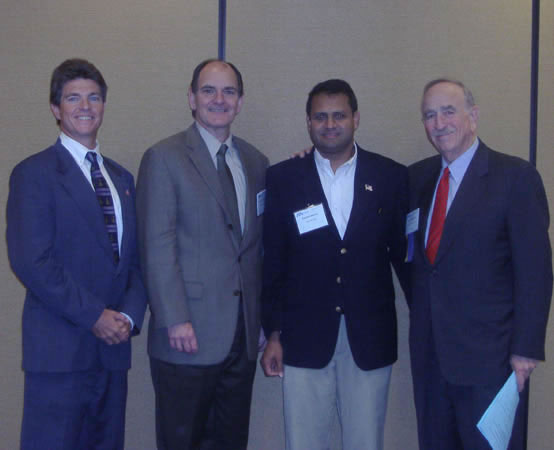
Saturday, August 9, 2008 2:00 - 3:30 p.m. American Bar Association Annual Meeting, New York City Hilton New York Speakers: Jay Foonberg, Esq. - Author of Best Sellers "How to Start and Build a Law Practice" and "How to get and keep good clients', Beverly Hills, CA Kenneth A. Vercammen, Esq. – Chair, ABA GP Estate Planning and Probate Committee Edison, NJ Charles Sabatino, director of the ABA's Commission on Law & Aging Parag Patel, Esq. Iselin, NJ Tax Committee Chair Primary Sponsors: General Practice Section Co-sponsors: ABA Commission on Law & Aging, Health Law Section, YLD, Senior Lawyers Division, Real Probate & Trust Section, Tax Law Section Topics: Medicaid Law changes in 2006-2007- Protect yourself from inaccurate advice and malpractice Getting referrals from other professionals The aftermath of the Terry Schiavo case and Living Wills. Forms you can use Email newsletters "Representing seniors- Doing well by doing good.-Do you know how? - Foonberg's 10 page check list." How to get more referrals and repeat business How to manage telephone conversations with your clients Marketing with written fee agreements -Ethics and marketing without violating the Rules of Professional Conduct Elder Law may be the biggest practice area of your career. There are 50,000 baby boomers/ day turning 60 and soon to be on Medicaid and will need legal advise. Elder Law is one of the biggest growth fields. Substantial changes in Medicaid law requires attorneys to learn ideas to avoid Medicaid/ nursing home liens. Cant attend program List of Articles on CD for Elder Law August 9, 2008 American Bar Association General Practice Division Kenneth A. Vercammen is an Edison, Middlesex County, NJ trial attorney who has published 125 articles in national and New Jersey publications on Probate and litigation topics. He often lectures to trial lawyers of the American Bar Association, New Jersey State Bar Association and Middlesex County Bar Association. He is Chair of the American Bar Association Estate Planning & Probate Committee. He is also Editor of the ABA Elder Law Committee Newsletter He is a highly regarded lecturer on litigation issues for the American Bar Association, ICLE, New Jersey State Bar Association and Middlesex County Bar Association. His articles have been published by New Jersey Law Journal, ABA Law Practice Management Magazine, and New Jersey Lawyer. He is the Editor in Chief of the New Jersey Municipal Court Law Review. Mr. Vercammen is a recipient of the NJSBA- YLD Service to the Bar Award. In his private practice, he has devoted a substantial portion of his professional time to the preparation and trial of litigated matters. He has appeared in Courts throughout New Jersey several times each week on many personal injury matters, Municipal Court trials, and contested Probate hearings. |
Elder Law 2007 - Changes in the law and Expanding an Elder Law Practice - New articles, ABA newsletters and Community events
Elder Law 2007 - Changes in the Law and Expanding an Elder Law Practice |
Saturday, August 11 2:00 -- 3:30 p.m. Charles Sabatino, director of the ABA's Commission on Law & Aging Kenneth A. Vercammen, Esq. - co-author "Nuts & Bolts of Elder Law", Edison, Joan Burda, Author " Estate Planning for Same Sex Couples" Primary General Practice Elder Law may be the biggest practice area of your career. 50,000 baby Topics:
NJ LAWS LEGAL website: kennethvercammen.com FREE EMAIL LEGAL NEWSLETTER: We provide information on recent laws on Elder |
Elder Care Law 2008 Program - New articles, ABA newsletters and Community Events
Elder Care Law 2008 Program |
WHERE: Jack Cooper's Restaurant, Tano Mall, 1199 Amboy Ave., Edison, NJ WHEN: February 20, 2008 8:30am Hot Buffet Breakfast 9:00am Meeting Starts Sponsor: Middlesex- Somerset Insurance and Financial Advisors SPEAKER: Kenneth Vercammen, Esq. of Edison (Co-Author- NJ Wills & Probate) You won't live forever and you can't take it with you. What should you do? Main Topics: 1. Wills and the changes to the NJ Probate Law 2. Power of Attorney with new HIPPA provisions 3. 2008 maximum $$$ per month Medicaid recipient Cost = $15.00 Member of Insurance & Financial Advisors $25.00 Non-Member COMPLIMENTARY MATERIAL: Brochures on Wills, "Probate and Administration of an Estate", Power of Attorney, Living Wills, Real Estate Sales for Seniors, and Trusts. Here is your opportunity to listen to an experienced attorney who will answer questions how to distribute your property and avoid many rigid provisions of state law. For more information on Elder law, visit the Website www.CentralJerseyElderLaw.com Information: Tom Schreiner, LUTCF, RFC, CSA, FIC (908) 722-6336 Email: thomas.schreiner@kofc.org President of Insurance and Financial Advisors of Middlesex, Somerset, and Union Counties |
Thursday, July 14, 2011
Editor-Volunteer Intern Wanted - To Serve as Assistant Editor of American Bar Association -New articles, ABA newsletters and Community events
Editor-Volunteer Intern Wanted - To Serve as Assistant Editor of American Bar Association GP Solo Estate Planning & Probate Newsletter and Assistant Editor of the NJ Municipal Court Law Review |
|
Editor-Volunteer Intern Wanted - To Serve as Assistant Editor of American Bar Association-New articles, ABA newsletters and Community events
Editor-Volunteer Intern Wanted - To Serve as Assistant Editor of American Bar Association GP Solo Criminal Law Newsletter and Assistant Editor of the NJ Municipal Court Law Review |
Duties |
Editor-Volunteer Intern Wanted-New articles, ABA newsletters and Community events
Editor-Volunteer Intern Wanted |
EDITOR-VOLUNTEER INTERN WANTED - Duties |